All three major U.S. stock indices climbed on Wednesday.
The Dow Jones Industrial Average and S&P 500 rebounded after three days of losses, while the Nasdaq rose for the second consecutive session.
Fed’s stance less hawkish than feared
Markets breathed a sigh of relief as the Federal Reserve’s hawkish cut proved less aggressive than anticipated.
Following the Federal Open Market Committee (FOMC) meeting, the Fed trimmed its target for the federal funds rate by a quarter point to 3.5%-3.75% and announced plans to inject liquidity into the market through short-term Treasury purchases.
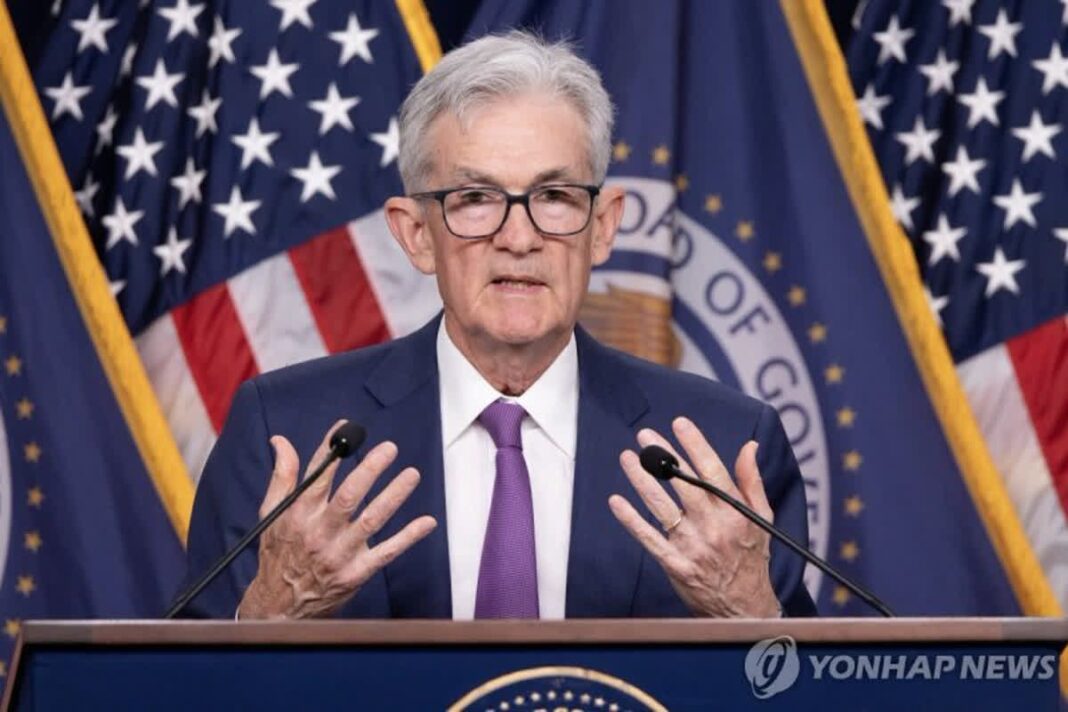
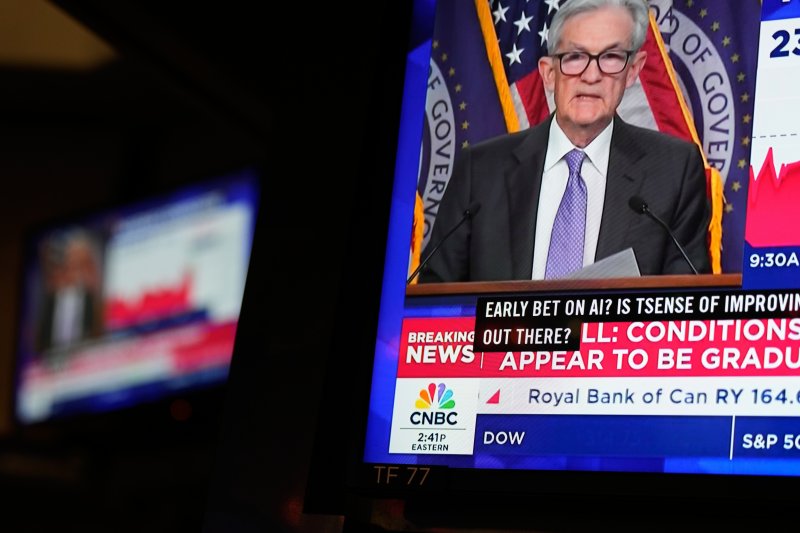
In the subsequent press conference, Fed Chair Jerome Powell noted that both inflation and unemployment face upside risks, adding that future rate decisions will hinge on economic developments.
Powell emphasized that rate hikes are off the table for now, and while inflation data remains limited, recent trends suggest stabilization. This indicates the Fed’s policy focus is shifting towards addressing unemployment, potentially through further rate cuts.
Broad-based gains
All three major indices posted gains.
The Dow surged 497.46 points (1.05%) to close at 48,057.75, while the S&P 500 added 46.17 points (0.67%), finishing at 688.68.
The Nasdaq briefly dipped into negative territory following the FOMC statement but managed to end the session higher. However, its gains were the most modest among the three benchmarks, possibly due to concerns that future rate cuts might not meet market expectations.
The tech-heavy index rose 77.67 points (0.33%) to 23,654.16.
The CBOE Volatility Index, Wall Street’s so-called ‘fear gauge’, plummeted 1.16 points (6.85%) to 15.77.
Oracle tumbles despite AI growth
Oracle, a rising key player in AI data centers, saw its stock plunge in after-hours trading following disappointing quarterly results.
After closing regular trading up 1.48 USD (0.67%) at 223.01 USD, Oracle shares nosedived 15.26 USD (6.84%) to 207.75 USD in extended trading.
While adjusted earnings per share of 2.26 USD beat the Street’s forecast of 1.64 USD, revenue fell short at 16.06 billion USD versus the expected 16.21 billion USD, spooking investors.
However, the company’s AI segment continued to show strength.
Cloud revenue hit 7.98 billion USD, surpassing analysts’ projections of 7.92 billion USD.
More impressively, Oracle’s backlog of unfulfilled orders due to capacity constraints skyrocketed 438% year-over-year to 523 billion USD, crushing the consensus estimate of 501.8 billion USD.
This suggests that Oracle is struggling to keep pace with soaring demand for its AI data center offerings.
Nvidia loses ground
AI-related stocks showed mixed performance.
Both Nvidia and Microsoft (MS) faced selling pressure.
Despite securing export approval for its H200 chips, Nvidia continued to struggle. Investors questioned whether shipping Taiwan-made chips to the U.S. for security checks before exporting to China would meaningfully boost earnings. Concerns also mounted over China’s push for semiconductor independence, which could limit Nvidia chip imports.
Nvidia shares slipped 1.19 USD (0.64%) to 183.78 USD, while Microsoft tumbled 13.46 USD (2.74%) to 478.56 USD.
Tesla and Palantir buck the trend
In contrast, Tesla gained ground on news of a potential SpaceX IPO. Expectations are rising that if SpaceX goes public next year, Tesla will also reap collateral benefits as CEO Elon Musk’s tech empire solidifies its position.
Optimism is growing that Tesla’s investment in SpaceX and Musk’s vision of integrating his vast tech empire , encompassing X, SpaceX, xAI, and Tesla, will create powerful synergies.
Palantir surged 6.07 USD (3.34%) to 187.91 USD, while Alphabet climbed 3.25 USD (1.02%) to 321.00 USD. Apple also edged up 1.60 USD (0.58%) to close at 278.78 USD.