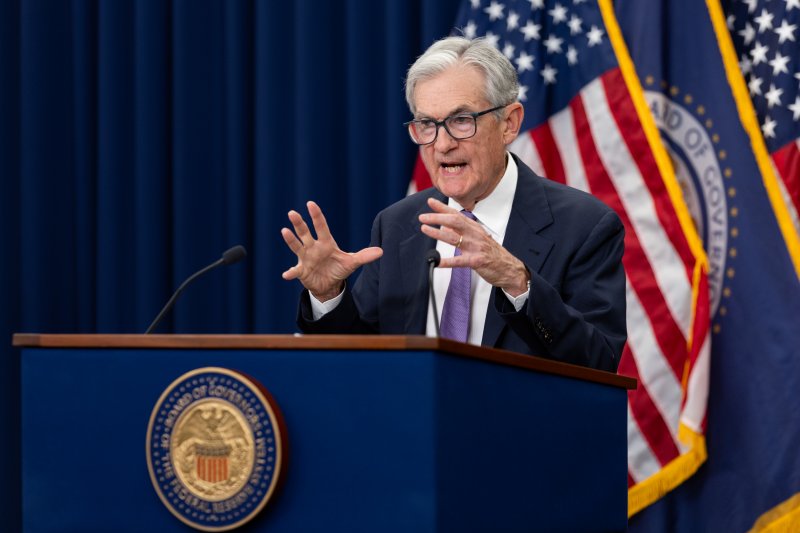
The Federal Reserve is grappling with internal discord over potential further interest rate cuts.
With the year’s final FOMC meeting slated for December 9-10, the Fed is forced to determine monetary policy without a clear picture of the economic landscape, given the uncertain release schedule of key economic indicators.
The recent federal government shutdown, which lasted an unprecedented 43 days from October 1 to November 12, has caused significant delays in the compilation and release of U.S. economic data.
The U.S. September jobs report, originally due earlier, is now scheduled for release on November 20, a seven-week delay.
Vice Chair Jefferson urges caution on additional rate cuts
The Wall Street Journal reported on Monday that the Fed is experiencing deep internal divisions as it attempts to balance its dual mandate of controlling inflation and maintaining employment stability amid a void of economic data.
Fed Vice Chair Philip Jefferson’s recent comments at a Kansas City Federal Reserve event highlight the central bank’s dilemma. He noted the persistent high inflation and deteriorating employment conditions, emphasizing the need for caution regarding further rate cuts given these conflicting trends and the lack of reliable indicators.
To address inflation, rates must be raised; to address worsening employment, rates must be lowered.
In September and October, the Fed cut the benchmark interest rate by 0.25 percentage points in two consecutive FOMC meetings, bringing it to a range of 3.75% to 4.0%.
Despite the data delays caused by the shutdown, market expectations for additional rate cuts have rapidly diminished. The Chicago Board Options Exchange (CBOE) FedWatch tool shows the probability of another rate cut has plummeted from 94% on October 17 to just 41% now.
Investors now see a nearly 60% chance of rates remaining unchanged at the December FOMC meeting.
In his speech on Monday, Jefferson noted that while rates are still somewhat restrictive, recent cuts have brought the Fed’s benchmark rate closer to a neutral level that neither stimulates nor restrains economic growth.
Fed split between inflation hawks and labor market doves
The lack of reliable economic indicators has led to a sharp divide in opinions within the Fed. Some members who previously supported rate cuts have recently expressed opposition to further reductions, arguing that without clear signs of labor market weakness or inflation easing, additional cuts would be unwarranted.
Two distinct factions have emerged within the Fed.
The inflation hawks are concerned that inflation has exceeded the Fed’s 2% target for four consecutive years.
They believe that tariffs imposed by U.S. President Donald Trump will continue to exert upward pressure on inflation for at least two more years. This group fears that further rate cuts could extend the timeline for inflation to return to the Fed’s target to 6-7 years.
The inflation hawks include Governor Michael Barr and regional Fed presidents Susan Collins (Boston), Austan Goolsbee (Chicago), Thomas Barkin (Richmond), and Mary Daly (San Francisco).
In contrast, the labor market doves warn that excessive focus on inflation could trigger an unnecessary recession. They argue that while inflation threats are not currently severe, the risk of economic downturn is high, making them supportive of a December rate cut.
Three board members appointed by Trump align with the labor market dove faction.
This group includes recently appointed members Steven Mnuchin, potential future Fed Chair candidate Christopher Waller, and Governor Michelle Bowman.
They advocate for a rate cut in December to preemptively stave off a recession.
As the year’s final FOMC meeting approaches in about a month, the Fed finds itself in uncharted territory, with limited visibility into the economic future.