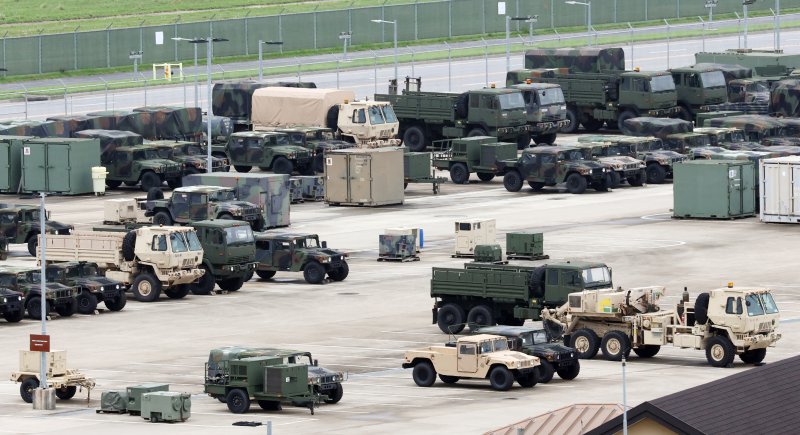
On Wednesday, Congress has passed the National Defense Authorization Act (NDAA) for the upcoming fiscal year, which prevents the administration from unilaterally reducing U.S. troop levels in South Korea. This move indicates that the Congress is once again restraining potential force reductions during the second term of U.S. President Donald Trump, highlighting ongoing concerns about U.S.-South Korea security issues.
The U.S. Senate approved the NDAA with a 77-20 vote, following its passage in the House on December 10. The bill now awaits Trump’s signature.
The legislation prohibits using defense funds to reduce U.S. troops in South Korea below the current 28,500 level. It also restricts the use of funds to complete the transfer of wartime operational control outside the agreed-upon U.S.-South Korea framework.
However, the restrictions can be lifted after 60 days if the relevant committee receives documentation showing the reduction aligns with U.S. national security interests or has been coordinated with military allies like South Korea, Japan, and the United Nations Command.
The NDAA is, an annual bill for reviewing defense policies and budgets. It has reintroduced direct restrictions on using funds for troop reductions in South Korea. This provision, absent during the Biden administration, has resurfaced under Trump’s second term.
The bill also limits U.S. force reductions in Europe. According to the New York Times, it prohibits reducing troops stationed in Europe below 76,000 for over 45 days, with exceptions for NATO-coordinated moves proven not to threaten U.S. national security.
Additionally, the NDAA approves 800 million USD in military aid to Ukraine and millions for allies like Israel, Taiwan, and Iraq, overcoming opposition from far-right Republicans critical of allied defense spending.
Contentious provisions were also included. Regarding the incident where “war crime” allegations arose during an attack on a suspected drug-smuggling vessel in international waters near Venezuela, the bill mandates the Pentagon to release attack orders and unedited footage to Congress. If the mandate is not met, the regulation stipulates a 25% cut to the Defense Secretary’s travel budget.
The fiscal year 2026 defense budget is set at 901 billion USD, an increase of 8 billion USD over the government’s request. It reflects bipartisan support for key weapons systems such as new submarines, fighter jets, and drone technology, as well as a 3.8% military pay raise.
Notably, the bill repeals the Authorization for Use of Military Force (AUMF) from the 1991 Gulf War and 2002 Iraq War, returning war powers to Congress. This measure retracts the authority that allowed the president to conduct war without congressional consent, signifying a return of war powers to Congress.
The NDAA also includes Trump administration-aligned provisions such as ending Syria sanctions, banning DEI (Diversity, Equity, and Inclusion) programs, and cutting climate-related budgets.