U.S. President Donald Trump has vowed retaliation for two consecutive days following the fatal shooting of U.S. troops in Syria. This comes despite Trump’s push to normalize relations and ease sanctions with Syria’s new transitional government. However, Trump clarified that his target is the Islamic State (ISIS), not the Syrian transitional government.
According to local media outlets such as Fox News, during a pre-Christmas event at the White House on December 14, Trump addressed the previous day’s shooting incident in Syria. Stating that they have lost two great patriots to evil people, he warned of severe consequences for those responsible.
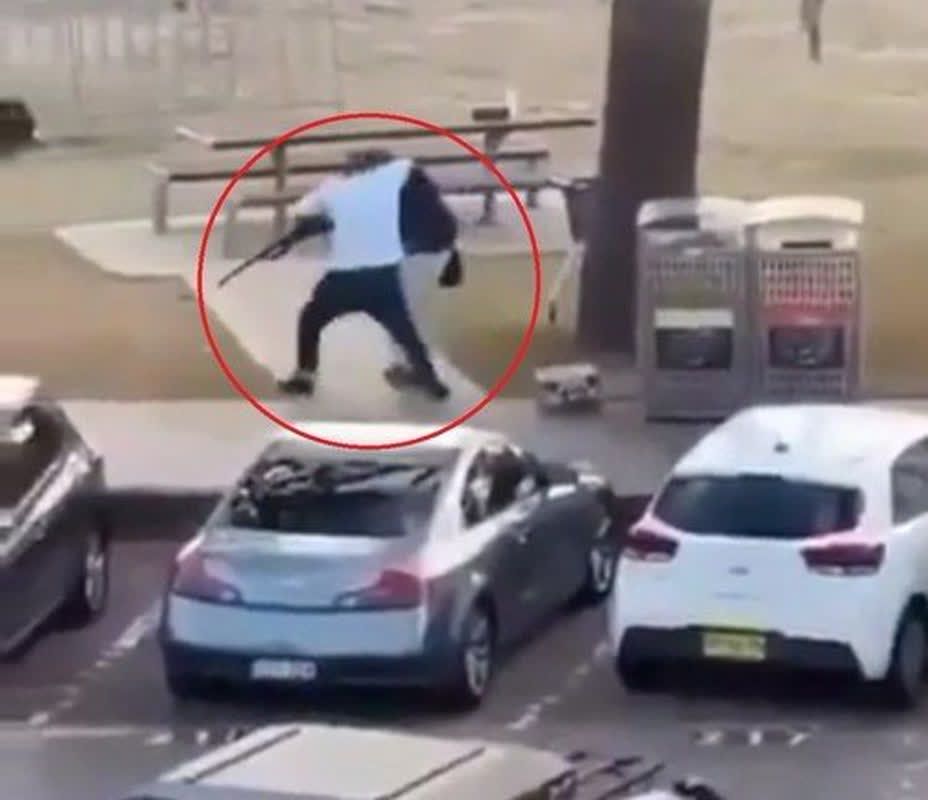
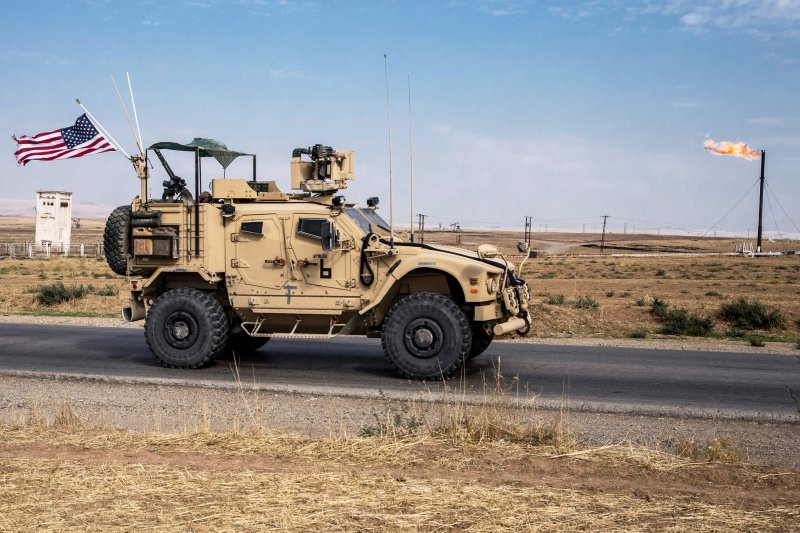
The attack occurred in Palmyra, central Homs province, where a Syrian security force member opened fire on U.S. troops during a night patrol. Two U.S. service members and an American civilian interpreter were killed, while three other U.S. soldiers and two Syrian security personnel were wounded. The assailant was killed at the scene. Since 2014, U.S.-led coalition forces (CJTF-OIR) have conducted operations in Syria to eliminate IS remnants, even during the civil war. The Syrian transitional government, which replaced Bashar al-Assad’s regime last December, continues to participate in these operations.
On December 13, Trump promised “very serious retaliation” via Truth Social. In his December 14 speech, he narrowed the scope, stating, “It wasn’t the Syrian government, but ISIS. The Syrian government fought on our side, and their new president fought on our side.”
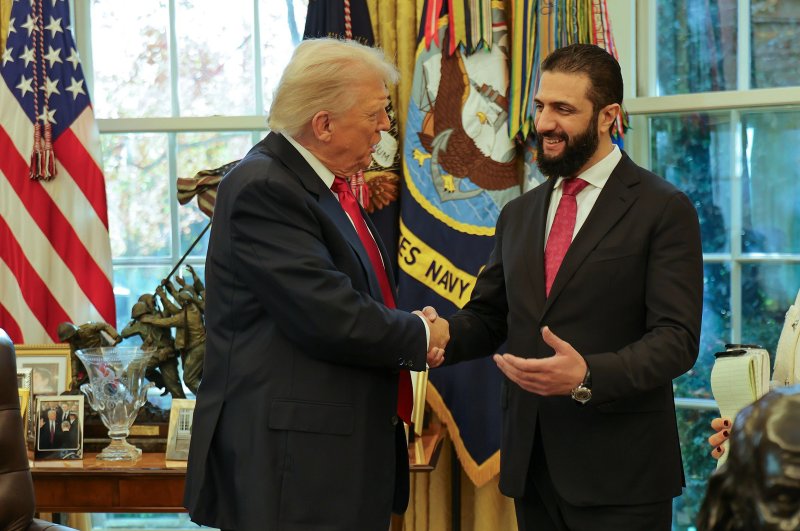
Trump has been working to build pro-American alliances in the Middle East, centered on Saudi Arabia and Israel, since his first term. In his second term, he has moved closer to the Syrian transitional government. After imposing sanctions and launching missile strikes against the Assad regime during his first term, Trump announced plans to normalize relations with the new Syrian government in May. Last month, he held a two-hour private meeting with Syrian President Ahmed al-Shara, the first Syrian leader to visit the White House, and promised to suspend sanctions against Syria.
The Syrian transitional government, anxious to maintain U.S. support, acted swiftly. Syrian Interior Ministry spokesman Nureddin Albaba announced on state TV that they had planned to dismiss the suspect due to extremist Islamic ideology.
The Interior Ministry reported that the suspect had recently joined a newly formed security force unit in the Badia desert region, including Palmyra. This force, under the Interior Ministry, is responsible for domestic security and counter-terrorism. Suspecting IS infiltration, they had reassigned the suspect to equipment security duties as a precaution.
On December 14, the Interior Ministry announced “precise and decisive security operations in Palmyra following the despicable terrorist attack linked to IS.” They also reported arresting five suspects involved in the attack on U.S. forces. Local media reported that on the same day, security forces patrolling Maarat al-Numan in northwestern Idlib province came under heavy fire, resulting in four deaths and one serious injury. The attackers remain unidentified.