Wednesday, March 18, 2026

Hyundai’s 2026 Profit Forecast: How Tax Cuts and Hybrid Models Will Boost Earnings

Analysts project that Hyundai Motor will see its operating profit rebound to approximately 14 trillion KRW (approximately 9.57 billion USD) next year. Additionally, the company is expected to benefit from a reduction in U.S. tariff burdens, potentially saving over 500 billion KRW (approximately 342 million USD) per quarter.

Samsung Securities reported on Monday that Hyundai’s quarterly tariff expenses are set to decrease significantly. This reduction stems from the U.S. lowering its auto tariff rate from 25% to 15%, coupled with a 3.75% rebate on parts for locally manufactured vehicles. As a result, Hyundai’s tariff burden is expected to drop from about 1 trillion KRW (approximately 684 million USD) to around 4.8 trillion KRW (approximately 3.28 billion USD) per quarter.

Eun-young Lim, Head of Samsung Securities’ mobility team, forecasted production levels of 70,000 to 80,000 units in 2025. She anticipated further improvements in 2026, citing increased production efficiency and higher part tariff rebates, particularly with the manufacture of hybrid models like the Palisade. Lim also predicted that Hyundai’s global hybrid sales share of lead models will grow from 15% to 20%.

Lim noted that as Kia’s sales increase, Hyundai’s share of R&D costs will likely decrease. She projects that by 2026, thanks to strong performances from Hyundai Rotem, Hyundai Capital, and the company’s U.S. financial entities, Hyundai’s operating profit could recover to the 14 trillion KRW (approximately 9.57 billion USD) range.

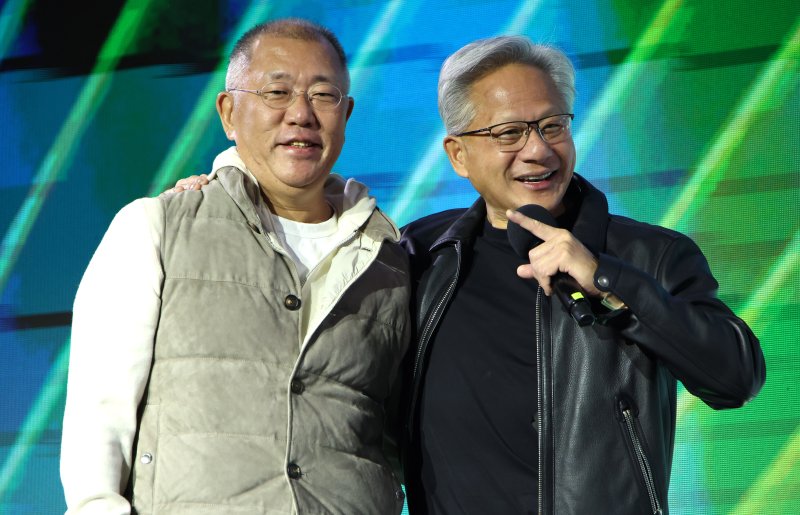
In the realm of artificial intelligence, Lim believed Hyundai is poised to outpace most automakers, with Tesla being the notable exception, due to its partnership with Nvidia. She pointed out that Hyundai Motor Group’s purchase of 50,000 GPUs demonstrates its financial capability to build AI infrastructure. For Nvidia, this represents securing a client capable of making repeated high-performance chip purchases.

Lim elaborated that Hyundai Motor Group is starting with investments in data centers. She mentioned that the second generation of Boston Dynamics’ E-Atlas is currently undergoing reinforcement learning on Nvidia’s platform. Furthermore, she suggested that Nvidia might consider an equity investment in Hyundai.

Highlighting Hyundai’s current phase of benefiting from its subsidiaries’ growth, Lim predicted that as each affiliate enhances its cash-generating capabilities, the pressure to invest in new business ventures will likely decrease.
Hot this week

Unlocking the Power of Intel Core Series 2: A Comprehensive Guide to Edge AI Solutions

Intel unveils Core Processor Series 2 and AI suite for healthcare, enhancing edge computing performance and reliability in industrial settings.

Samsung’s Record R&D Investment: How it is Shaping the Future of AI and Semiconductors

Samsung Electronics invested a record $25.33 billion in R&D to lead in AI and semiconductors, boosting its future tech capabilities.

How Rising Fuel Prices Impact Asian Airlines: A Comparison of FSC vs. LCC

Low-cost carriers are struggling to cope with rising fuel prices, lacking effective hedging strategies unlike major airlines.

SK Group Invests 630 Million USD AI Company

SK Group invests heavily in AI, aiming to transform into a leader in the AI market through a new U.S. investment firm.

Nvidia’s Jensen Huang Predicts 1000x Surge in AI Computing Demand

Nvidia's CEO highlights surging AI computing demand due to AI agents like OpenClaw, boosting memory chip demand from firms like Samsung.

Topics

Unlocking the Power of Intel Core Series 2: A Comprehensive Guide to Edge AI Solutions

Intel unveils Core Processor Series 2 and AI suite for healthcare, enhancing edge computing performance and reliability in industrial settings.

Samsung’s Record R&D Investment: How it is Shaping the Future of AI and Semiconductors

Samsung Electronics invested a record $25.33 billion in R&D to lead in AI and semiconductors, boosting its future tech capabilities.

How Rising Fuel Prices Impact Asian Airlines: A Comparison of FSC vs. LCC

Low-cost carriers are struggling to cope with rising fuel prices, lacking effective hedging strategies unlike major airlines.

SK Group Invests 630 Million USD AI Company

SK Group invests heavily in AI, aiming to transform into a leader in the AI market through a new U.S. investment firm.

Nvidia’s Jensen Huang Predicts 1000x Surge in AI Computing Demand

Nvidia's CEO highlights surging AI computing demand due to AI agents like OpenClaw, boosting memory chip demand from firms like Samsung.

How Samsung’s Galaxy S26 Series Leverages India’s R&D for Innovation

Samsung's R&D centers in India are key to developing the Galaxy S26, highlighting India's role in global tech innovation.

GPT-5.4 vs. GPT-5.2: What Makes OpenAI’s Latest Model a Game Changer?

OpenAI launched GPT-5.4, an AI model enhancing professional tasks with improved coding, reasoning, and tool integration capabilities.

Apple MacBook Air M5: Is the Price Increase Worth the AI Performance Boost?

Apple launches the MacBook Air with M5 chip, doubling storage and enhancing AI capabilities, starting from 1,223 USD.

Related Articles