Wednesday, March 18, 2026

Is Space the Future of AI? Exploring Elon Musk’s Vision for Data Centers Beyond Earth

As power demand surges due to increased artificial intelligence (AI) usage, IT companies are reviewing plans to build necessary data centers in space.

On Sunday, The Wall Street Journal (WSJ) reported that some of the world’s wealthiest tech tycoons are discussing constructing massive AI data centers in space. Given the enormous energy requirements, they suggested that this could be the most viable solution.

The journal noted that as demand for power needed for AI skyrockets, relocating data centers to space may become necessary. The advantages include solar energy without clouds or nighttime interference, and easier cooling in the vacuum of space.

Moreover, it pointed out strengths such as the absence of regulatory hurdles and NIMBY concerns.

Amazon founder Jeff Bezos predicted that space data center construction costs will decrease in the coming decades, stating that space will ultimately become one of the places that enhances life on Earth.

Alphabet, Google’s parent company, plans to launch two satellites in 2027 to test machine learning hardware in space.

Tesla CEO Elon Musk, known for his Mars ambitions, recently told investors that new solar-powered Starlink satellites could generate 100 gigawatts (GW) of energy annually.

On his social media platform X, Musk claimed this could be achievable within four to five years, with the potential to generate 100 terawatts of power annually.

The journal noted that Musk’s stance has shifted rapidly. Just a few years ago, he urged the energy sector to increase production due to potential power shortages from AI, electric vehicles, and other technologies. Now, he is looking to space for solutions.

The Moon is emerging as a prime candidate for these space data centers.

Phil Metzger, a professor at the University of Central Florida, analyzed that while space data centers are currently impractical, they could become viable within a decade.

AI companies are actively expanding their energy infrastructure to meet growing power demands.

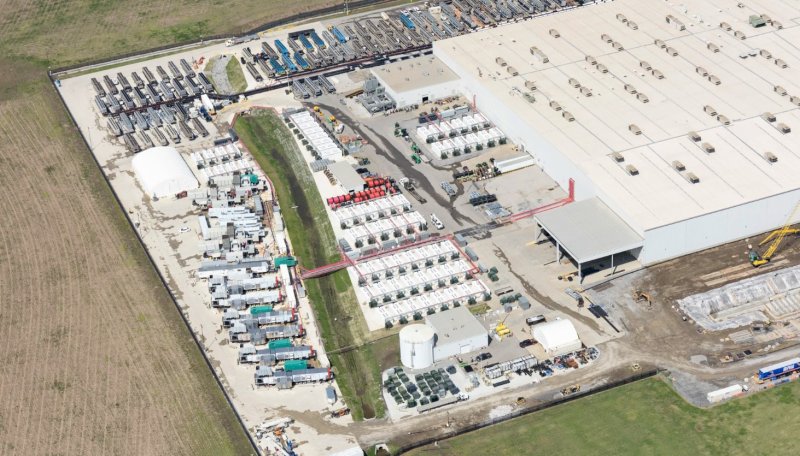
Musk’s AI firm, xAI, currently relies on gas turbines for temporary power and is negotiating with the U.S. government to secure 100 gigawatts (GW) annually.

Some industry leaders, including Scott Strazik, CEO of GE Vernova, expressed concern that current U.S. power supplies may fall short of demand.

However, Strazik remained optimistic, suggesting that if GE Vernova starts placing AI servers in space, demand will continue to grow.

Hot this week

Unlocking the Power of Intel Core Series 2: A Comprehensive Guide to Edge AI Solutions

Intel unveils Core Processor Series 2 and AI suite for healthcare, enhancing edge computing performance and reliability in industrial settings.

Samsung’s Record R&D Investment: How it is Shaping the Future of AI and Semiconductors

Samsung Electronics invested a record $25.33 billion in R&D to lead in AI and semiconductors, boosting its future tech capabilities.

How Rising Fuel Prices Impact Asian Airlines: A Comparison of FSC vs. LCC

Low-cost carriers are struggling to cope with rising fuel prices, lacking effective hedging strategies unlike major airlines.

SK Group Invests 630 Million USD AI Company

SK Group invests heavily in AI, aiming to transform into a leader in the AI market through a new U.S. investment firm.

Nvidia’s Jensen Huang Predicts 1000x Surge in AI Computing Demand

Nvidia's CEO highlights surging AI computing demand due to AI agents like OpenClaw, boosting memory chip demand from firms like Samsung.

Topics

Unlocking the Power of Intel Core Series 2: A Comprehensive Guide to Edge AI Solutions

Intel unveils Core Processor Series 2 and AI suite for healthcare, enhancing edge computing performance and reliability in industrial settings.

Samsung’s Record R&D Investment: How it is Shaping the Future of AI and Semiconductors

Samsung Electronics invested a record $25.33 billion in R&D to lead in AI and semiconductors, boosting its future tech capabilities.

How Rising Fuel Prices Impact Asian Airlines: A Comparison of FSC vs. LCC

Low-cost carriers are struggling to cope with rising fuel prices, lacking effective hedging strategies unlike major airlines.

SK Group Invests 630 Million USD AI Company

SK Group invests heavily in AI, aiming to transform into a leader in the AI market through a new U.S. investment firm.

Nvidia’s Jensen Huang Predicts 1000x Surge in AI Computing Demand

Nvidia's CEO highlights surging AI computing demand due to AI agents like OpenClaw, boosting memory chip demand from firms like Samsung.

How Samsung’s Galaxy S26 Series Leverages India’s R&D for Innovation

Samsung's R&D centers in India are key to developing the Galaxy S26, highlighting India's role in global tech innovation.

GPT-5.4 vs. GPT-5.2: What Makes OpenAI’s Latest Model a Game Changer?

OpenAI launched GPT-5.4, an AI model enhancing professional tasks with improved coding, reasoning, and tool integration capabilities.

Apple MacBook Air M5: Is the Price Increase Worth the AI Performance Boost?

Apple launches the MacBook Air with M5 chip, doubling storage and enhancing AI capabilities, starting from 1,223 USD.

Related Articles