Following the Democratic Party’s recent landslide victories in local elections, the Trump administration is doubling down on efforts to ease the cost of living for Americans. U.S. President Donald Trump has proposed the idea of a 2,000 USD “tariff dividend” payment per person, with the White House affirming its commitment to making this a reality. Secretary of Treasury Scott Bessent has previewed a major announcement aimed at reducing prices of goods not produced domestically, such as coffee and bananas. Even the introduction of 50-year mortgages is being discussed. These moves come in the wake of Republican losses in the New York City mayoral race and gubernatorial contests in New Jersey and Virginia, signaling a shift towards policies that directly address pocketbook issues for everyday Americans.
Bessent Targets Coffee and Banana Prices
In a Fox News interview on Wednesday, Secretary Bessent revealed that there will be a significant announcement in the coming days regarding items not produced in the U.S., like coffee and bananas. He said he anticipates seeing prices drop rapidly, emphasizing that the goal is to lower costs of essential goods. Trump had previously mentioned plans to cut tariffs on coffee imports.
While the U.S. does produce bananas on a small scale in parts of Hawaii and Florida, commercial production is limited. The majority of bananas are imported from low-cost countries in Central and South America.
Kevin Hassett, Chair of the White House National Economic Council (NEC), also stated on Wednesday that people have been discussing changing food tariffs recently. He added that he expects to see more adjustments to food tariffs, and explained that the administration is developing measures to prevent foreign companies from using U.S. subsidiaries to circumvent tariffs.
2,000 USD Tariff Dividend Sparks Debate
Over the weekend, Trump unveiled his proposal for a 2,000 USD tariff dividend per person. On his social media platform Truth Social, Trump claimed that because tariff revenues are so high, “a dividend of at least $2000 a person (not including high income people!) will be paid to everyone.”
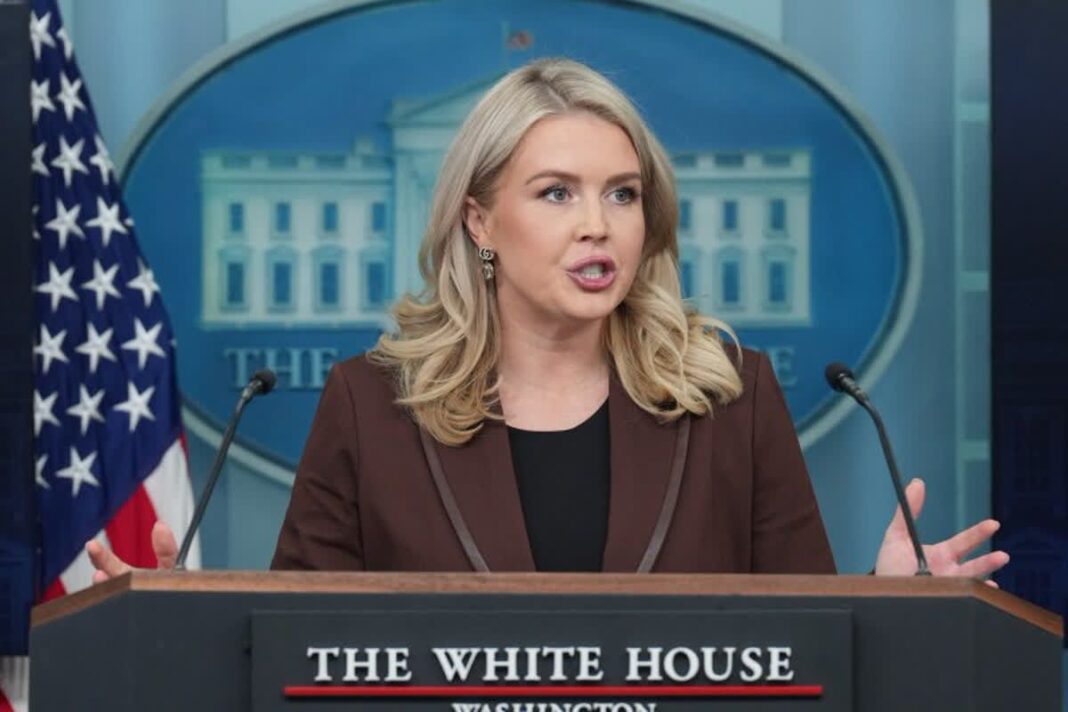
White House Press Secretary Karoline Leavitt confirmed the administration’s commitment to this initiative, stating they are exploring all legal avenues to implement it.
Tariff revenues have indeed surged. For the fiscal year ending September 30, they reached 195 billion USD, a 153% increase from the 77 billion USD projected for fiscal year 2024. However, this still represents less than 4% of total federal revenue.
U.S. media outlets have suggested that Trump’s sudden proposal is a response to the Democrats’ recent electoral success, which capitalized on the cost of living crisis. Many question the feasibility of the plan.
John Rico, an analyst at Yale University’s Budget Institute, estimated Trump’s annual tariff revenues at only 200 to 300 billion USD. However, distributing 2,000 USD to every citizen, including children, would require 600 billion USD. He told the Associated Press that the incoming revenue falls far short. CNN calculated that the total cost would be around 326 billion USD.
Congressional approval remains a significant hurdle. Alex Beene, an instructor of financial literacy education at the University of Tennessee Martin Campus, noted, “Even if the Supreme Court doesn’t strike down the tariff policy, Congress would likely prefer using these funds to address the growing national debt.”
50-Year Mortgages Under Consideration
The possibility of introducing 50-year fixed-rate mortgages has recently emerged. Bill Pulte, Director of the Federal Housing Finance Agency (FHFA), suggested this could be a game-changer for the housing market.
Critics argue that 50-year mortgages fail to address fundamental issues like housing supply shortages and high interest rates. Trump also responded that it might help a little bit, but did not show active support. Bessent also expressed caution, noting the uncertain effects of such a policy.
The Trump administration plans to roll out tax relief measures next year, including interest deductions on auto loans and Social Security tax exemptions for some seniors. It is also considering a “Trump Account” initiative, offering a 1,000 USD initial deposit for children born between December 31, 2024, and January 1, 2029.
Leavitt emphasized that under Trump’s leadership, energy costs and drug prices have improved compared to the previous administration. She projected that Americans will have more disposable income next year, thanks to middle-class tax cuts and other economic measures.