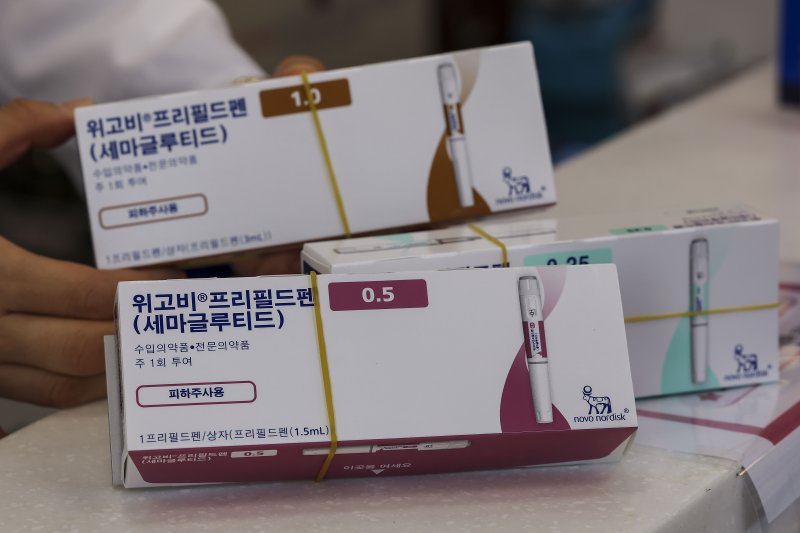
The monthly cost of major U.S. obesity treatments Wegovy and Zepbound is set to plummet from around 1,000 USD to approximately 300 USD, marking a significant price reduction.
U.S. President Donald Trump announced on Thursday at the White House that Eli Lilly, the manufacturer of Zepbound, and Novo Nordisk, which produces Wegovy, have agreed to slash prices for their obesity treatments in the United States.
According to Trump, both companies will adjust their pricing based on the Most Favored Nation principle. Wegovy’s price will drop from 1,350 USD to 250 USD per month, while Zepbound will see a decrease from 1,080 USD to 346 USD.
Trump added that Medicare and Medicaid beneficiaries could see their out-of-pocket expenses fall to around 50 USD through government subsidies. This move is expected to dramatically improve access for low-income and elderly populations.
U.S. consumers will soon have the option to purchase Wegovy and Zepbound directly through a new official website, TrumpRx, set to launch later this year.
Both medications belong to the GLP-1 (glucagon-like peptide-1) class, which works by stimulating insulin production to regulate blood sugar and suppress appetite. Trump stated, “These drugs will save countless American lives. I call them ‘fat drugs,’ but their effectiveness is remarkable.”
Trump strongly criticized pharmaceutical companies’ high-price strategies. He pointed out that while the U.S. represents only 4% of the world’s population, it accounts for 75% of drug companies’ profits – a disparity he termed a “chronic injustice.”
Trump revealed that he had issued an executive order earlier this year to implement a Most Favored Nation drug pricing policy. He credited his administration’s tariff strategy as a key factor in pressuring global pharmaceutical firms to lower their prices.
Traditionally, drug pricing in the U.S. has been left to the discretion of pharmaceutical companies. This, coupled with additional markups from pharmacy benefit managers (PBMs) and private insurers, has resulted in significantly higher drug prices compared to other nations.
Since his re-election, Trump has leveraged tariffs not only in trade negotiations but also as a tool to compel drug companies to reduce prices. This latest agreement follows similar price-cutting deals with other major pharmaceutical players, including Pfizer and AstraZeneca.