As the U.S. Supreme Court prepares to hear a crucial case on the Trump administration’s reciprocal tariffs, White House officials stress they have a backup plan. Even if the court rules against the tariffs, the administration intends to continue its tariff strategy using alternative trade laws.
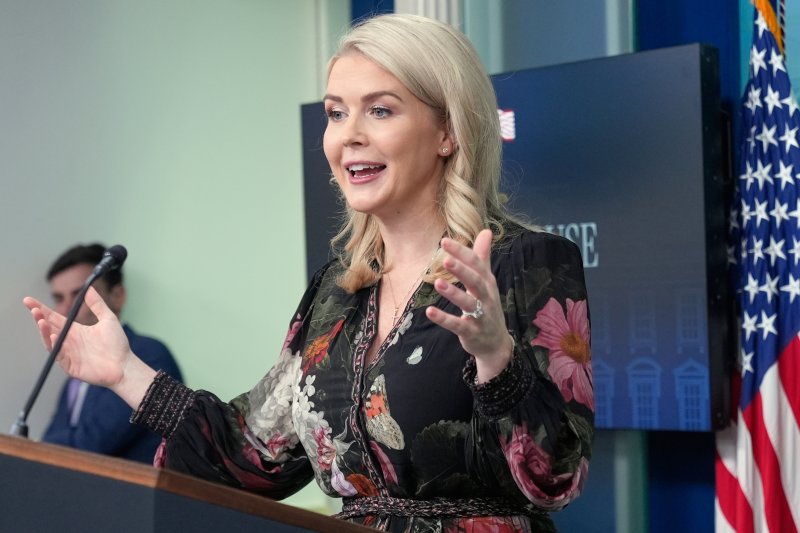
During a press briefing on Tuesday, White House Press Secretary Karoline Leavitt expressed full confidence in the legal arguments presented by the President and his team. “We remain optimistic that the Supreme Court is going to do the right thing,” she added.
Leavitt emphasized the importance of presidential emergency powers, arguing that the President must have the authority to impose tariffs in times of crisis. She highlighted how President Trump has used tariffs to resolve global disputes and attract investment. When asked what the administration would do if the court rules against it, Leavitt answered, “The White House is always preparing for Plan B. It would be imprudent of the President’s advisors not to prepare for such a situation.” However, she didn’t provide specifics on the alternative strategy.
In February and March, the Trump administration levied 20-25% tariffs on Canada, Mexico, and China, citing their alleged negligence in controlling fentanyl production and distribution. In April, it imposed reciprocal tariffs of 10-50% on 185 countries and regions, claiming unfair trade practices against the U.S.
The administration justified these tariffs under the International Emergency Economic Powers Act (IEEPA). Enacted in 1977, IEEPA grants the U.S. president broad authority to declare economic emergencies in response to extraordinary threats. Historically, it has been used to sanction countries like Iran and North Korea.
In response, five U.S. companies and twelve state governments, including Oregon, filed a lawsuit in April challenging the legality of both the fentanyl and reciprocal tariffs. Lower courts ruled in favor of the plaintiffs in May and August. The Trump administration has since appealed to the Supreme Court, with oral arguments set to begin on Wednesday.
Treasury Secretary Scott Bessent acknowledged in a September interview that losing the case would require refunding about half the tariffs, calling it “a nightmare scenario for the Treasury.” U.S. Customs and Border Protection reports that businesses have paid approximately 90 billion USD in IEEPA tariffs as of September 23, surpassing half of the total tariff revenue for the 2025 fiscal year, which ended September 30.
U.S. Trade Representative Jamison Greer expressed confidence in the administration’s legal position during a September speech. He emphasized that even if they lose, “we will maintain tariffs through other legal avenues.” Greer specifically mentioned Section 301 of the Trade Act of 1974 and Section 232 of the Trade Expansion Act of 1962 as potential alternatives.
While both laws allow for trade retaliation, they differ procedurally from IEEPA. Invoking Sections 301 or 232 requires waiting for risk assessments from the USTR or Department of Commerce, respectively. In contrast, IEEPA allows for immediate action following a national emergency declaration. Trump has already used Section 232 this year to impose tariffs on imported steel and automobiles.