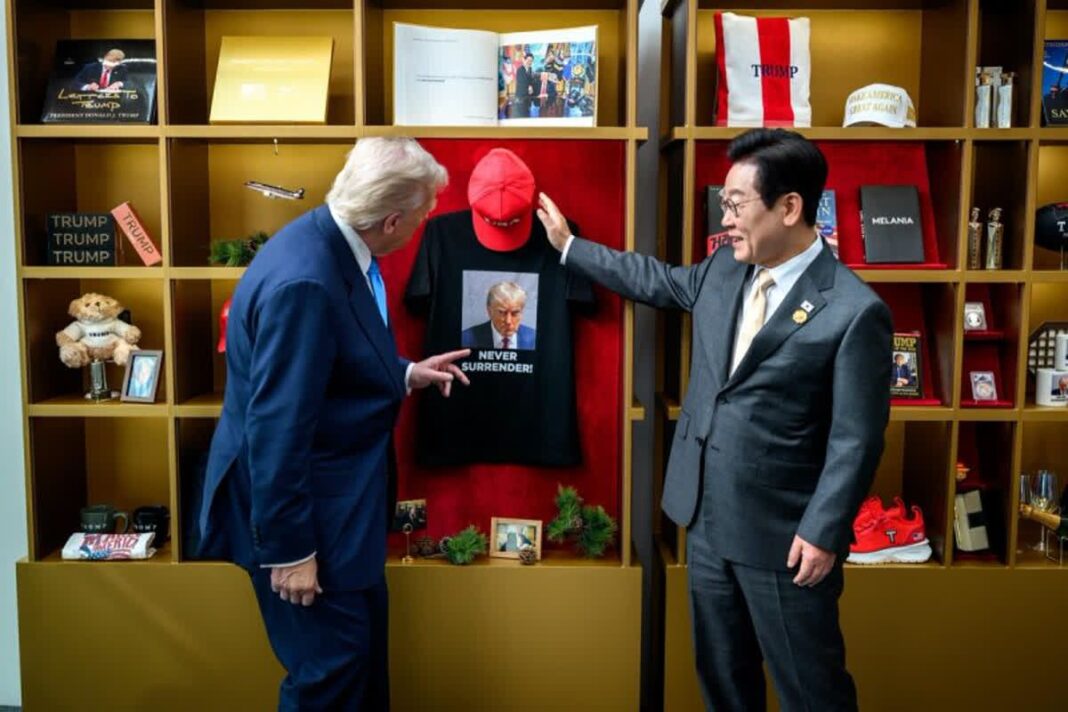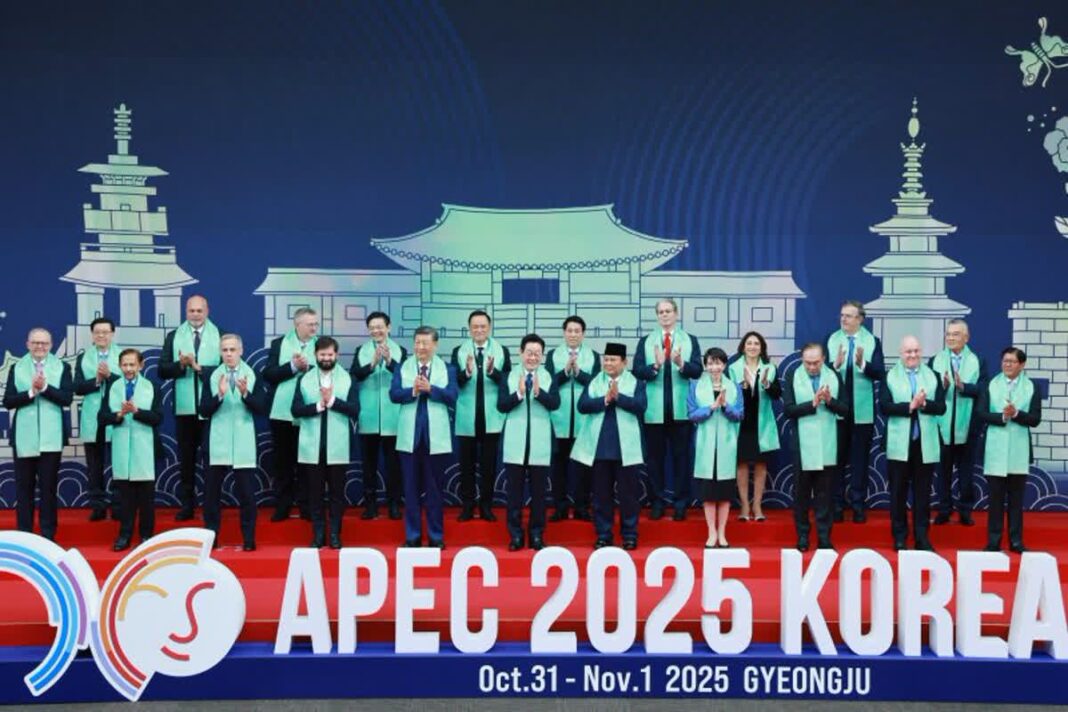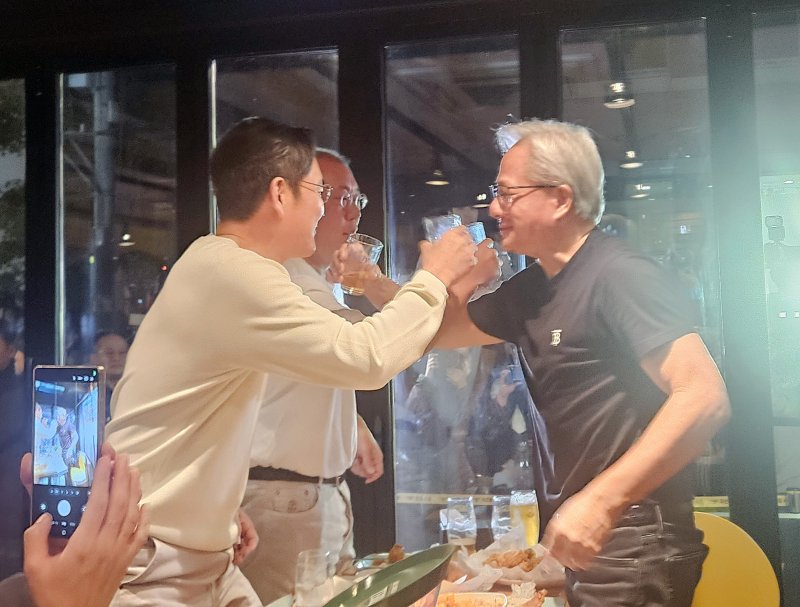
This scene is destined to be etched in the annals of global business history.
Following their casual dinner on the evening of October 30, NVIDIA CEO Jensen Huang, Samsung Electronics Chairman Lee Jae Yong, and Hyundai Motor Group Chairman Chung Eui-sun appeared on stage together. Their united front showcased a bond that transcends mere business partnerships, highlighting mutual respect and trust. This moment emerged as a standout highlight of the recent APEC CEO Summit in Gyeongju. Across industry circles and online platforms, the reaction was electric, with comments like, “I never thought I’d see such a scene in my lifetime.” The event has ignited fresh optimism surrounding the future of AI, semiconductors, and the automotive industry.
According to industry analysis on November 2, the Gyeongju APEC Summit and CEO Summit marked a watershed moment in three critical sectors: AI, semiconductors, and future mobility.
First, in High-Bandwidth Memory (HBM), the integration of Samsung Electronics into NVIDIA’s supply chain for high-bandwidth memory (HBM) has become a major topic of discussion. During Jensen Huang’s visit, Samsung Electronics swiftly positioned itself as a key supplier for HBM3E, HBM4, and GDDR7. SK Hynix is also set to bolster its market position as an HBM4 supplier. These developments signal that two Korean memory semiconductor giants are poised to dominate the next-generation HBM market, outpacing competitors like Micron Technology.
Furthermore, the APEC summit proved fruitful for South Korean tech giants and the government, who collectively secured 260,000 of NVIDIA’s sought-after GPUs during Jensen Huang’s visit. This acquisition is set to accelerate the nation’s manufacturing transformation and solidify its position in the global AI race.
SK Group Chairman Chey Tae-won took to LinkedIn to share his insights. He revealed years of strategic discussions with NVIDIA’s Jensen Huang, focusing on leveraging AI for meaningful change. Chey announced the fruition of these talks: a groundbreaking AI cloud partnership aimed at revolutionizing Korean manufacturing.
Another major win at this APEC was the reduction of U.S. tariffs on Hyundai Motor Group, the world’s third-largest automaker, from 25% to 15%. This breakthrough puts Hyundai on equal footing with Toyota in the U.S. market. Moreover, Hyundai’s extensive collaboration with NVIDIA in autonomous driving and robotics positions the Korean auto giant as a formidable challenger to Tesla’s dominance in future mobility.
During APEC, Korean companies held a series of dynamic meetings with visiting global CEOs. Lotte Chairman Shin Dong-bin, GS Chairman Heo Tae-soo, LG Electronics CEO Jo Joo-wan, Naver CEO Choi Soo-yeon, and LG Uplus CEO Hong Beom-sik all held talks with Amazon Web Services CEO Matt Garman. These discussions explored new business frontiers, with Garman announcing a hefty 5 billion USD investment plan for Korea.
The “APEC effect” or “Jensen Huang effect” sent ripples through the Korean stock market, with the KOSPI closing at 4,107.50 during the APEC week (October 27-31), marking a 4.21% surge from the previous week.
Hyundai and Kia shares skyrocketed on the NextTrade after-hours market following the tariff deal, jumping 13.97% and 10.48% respectively. Hyundai AutoEver, a key player in the group’s smart car and robotics initiatives, saw its stock soar 26.08% to 203,500 KRW (142.25 USD) on news of its NVIDIA collaboration. Samsung Electronics, once dubbed the “50,000 won stock,” closed at 107,500 KRW (75.14 USD) on the final day of the CEO Summit, October 31.