Wednesday, March 18, 2026

Pakistan and Afghanistan Agree to Ceasefire: What This Means for Regional Stability in 2025

Pakistan and Afghanistan have agreed to an immediate ceasefire, ending recent border clashes.

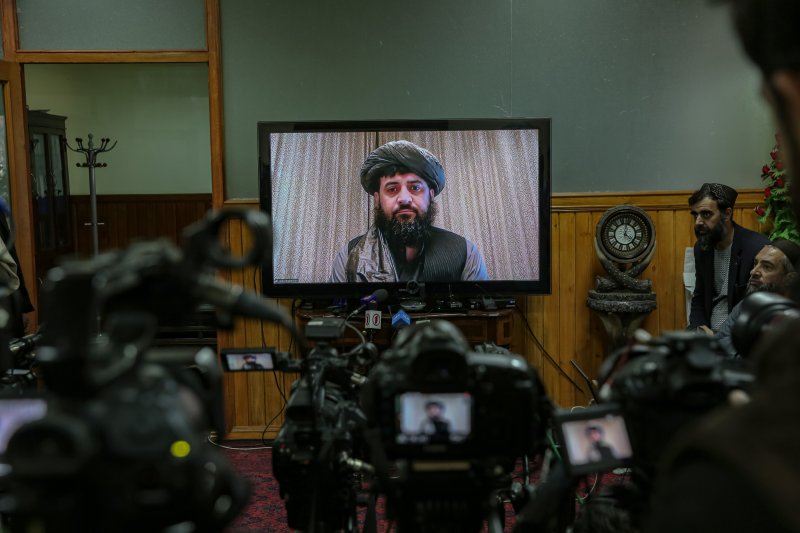
On Sunday, international media outlets, including AFP and BBC, reported that Pakistan and the Taliban government in Afghanistan have agreed to a ceasefire and to develop strategies for lasting peace and stability, mediated by Qatar and Turkey.

The two nations also plan to hold follow-up meetings in Istanbul, Turkey, on October 25 to maintain the ceasefire.

Afghan Defense Minister Mohammed Yaqoob emphasized that both countries have agreed on mutual respect and non-interference, stating that Afghanistan would refrain from hostile actions and avoid threatening or attacking its neighbor’s security.

Pakistan and Afghanistan share a 2,574 km border across rugged mountainous terrain.

Despite a previous 48-hour ceasefire agreement on October 15, Pakistan resumed airstrikes on October 17, resulting in at least 10 Afghan casualties.

This conflict, the most severe since the Taliban’s 2021 takeover of Afghanistan, was reportedly triggered by an explosion in Kabul on October 11, coinciding with the Taliban foreign minister’s visit to Pakistan’s rival, India.

Speculation arose that the blast targeted Noor Wali Mehsud, a Pakistani Taliban leader believed to be hiding in Afghanistan, prompting Taliban forces to open fire across the southern border into Pakistan, escalating tensions.

The Pakistani Taliban has conducted at least 600 attacks against Pakistani forces in the past year alone, contributing to the deteriorating relationship between the two nations.

Analysts suggest that the Afghan government’s perceived inaction against Pakistani Taliban elements operating within its borders led to Pakistan’s military response.

South Asia expert Michael Kugelman notes that while a prolonged ceasefire is expected, given the Taliban’s reluctance to engage in full-scale war with the militarily superior Pakistan, the potential for renewed tensions persists.

Hot this week

Unlocking the Power of Intel Core Series 2: A Comprehensive Guide to Edge AI Solutions

Intel unveils Core Processor Series 2 and AI suite for healthcare, enhancing edge computing performance and reliability in industrial settings.

Samsung’s Record R&D Investment: How it is Shaping the Future of AI and Semiconductors

Samsung Electronics invested a record $25.33 billion in R&D to lead in AI and semiconductors, boosting its future tech capabilities.

How Rising Fuel Prices Impact Asian Airlines: A Comparison of FSC vs. LCC

Low-cost carriers are struggling to cope with rising fuel prices, lacking effective hedging strategies unlike major airlines.

SK Group Invests 630 Million USD AI Company

SK Group invests heavily in AI, aiming to transform into a leader in the AI market through a new U.S. investment firm.

Nvidia’s Jensen Huang Predicts 1000x Surge in AI Computing Demand

Nvidia's CEO highlights surging AI computing demand due to AI agents like OpenClaw, boosting memory chip demand from firms like Samsung.

Topics

Unlocking the Power of Intel Core Series 2: A Comprehensive Guide to Edge AI Solutions

Intel unveils Core Processor Series 2 and AI suite for healthcare, enhancing edge computing performance and reliability in industrial settings.

Samsung’s Record R&D Investment: How it is Shaping the Future of AI and Semiconductors

Samsung Electronics invested a record $25.33 billion in R&D to lead in AI and semiconductors, boosting its future tech capabilities.

How Rising Fuel Prices Impact Asian Airlines: A Comparison of FSC vs. LCC

Low-cost carriers are struggling to cope with rising fuel prices, lacking effective hedging strategies unlike major airlines.

SK Group Invests 630 Million USD AI Company

SK Group invests heavily in AI, aiming to transform into a leader in the AI market through a new U.S. investment firm.

Nvidia’s Jensen Huang Predicts 1000x Surge in AI Computing Demand

Nvidia's CEO highlights surging AI computing demand due to AI agents like OpenClaw, boosting memory chip demand from firms like Samsung.

How Samsung’s Galaxy S26 Series Leverages India’s R&D for Innovation

Samsung's R&D centers in India are key to developing the Galaxy S26, highlighting India's role in global tech innovation.

GPT-5.4 vs. GPT-5.2: What Makes OpenAI’s Latest Model a Game Changer?

OpenAI launched GPT-5.4, an AI model enhancing professional tasks with improved coding, reasoning, and tool integration capabilities.

Apple MacBook Air M5: Is the Price Increase Worth the AI Performance Boost?

Apple launches the MacBook Air with M5 chip, doubling storage and enhancing AI capabilities, starting from 1,223 USD.

Related Articles