Wednesday, March 18, 2026

Trump’s Call for College Reform: Will MIT and Others Join the Controversial Pact?

U.S. President Donald Trump has urged American universities to join a federal agreement that includes provisions banning the consideration of race and gender in college admissions policies.

On Sunday, Trump took to Truth Social, stating, “Throughout most of our History, America’s Colleges and Universities have been a Great Strategic Asset of the United States. Tragically, however, much of Higher Education has lost its way, and is now corrupting our Youth and Society with WOKE, SOCIALIST, and ANTI-AMERICAN Ideology that serves as justification for discriminatory practices by Universities that are Unconstitutional and Unlawful.” The term “woke” originally referred to an awareness of progressive issues like racial and gender discrimination, but is now used by American conservatives as a pejorative term for the broader progressive movement.

Trump asserted, “My Administration is fixing this, and FAST, with our Great Reform Agenda in Higher Education. Our Nation’s Great Institutions will once again prioritize Merit and Hard Work before ‘group identity,’ resulting in tremendous new Research and Opportunity to benefit all Americans, and Equality being honored in American Businesses, Courts, and Culture.”

Trump urged universities to join the government’s proposed agreement to bring about “the Golden Age of Academic Excellence in Higher Education.” He added, “They [The universities] will stop racist Admission Policies, and put an end to unjust and illegal discrimination in Faculty Hiring. These Institutions will commit to High Quality Standards, an Intellectually Open Campus Environment (including the protection of Free Speech and Debate), Institutional Neutrality, major steps toward Affordability for Students, and an end to the entanglement of Foreign Money in the Finances of American Universities.”

Previously, the Trump administration sent letters to nine universities requesting their participation in this agreement. The proposed accord includes provisions such as banning race or gender considerations in admissions and hiring, limiting international undergraduate enrollment to 15%, requiring SAT or equivalent test scores, and freezing tuition for five years. In the letters, the administration offered an incentive, including significant federal funding, for universities that sign on.

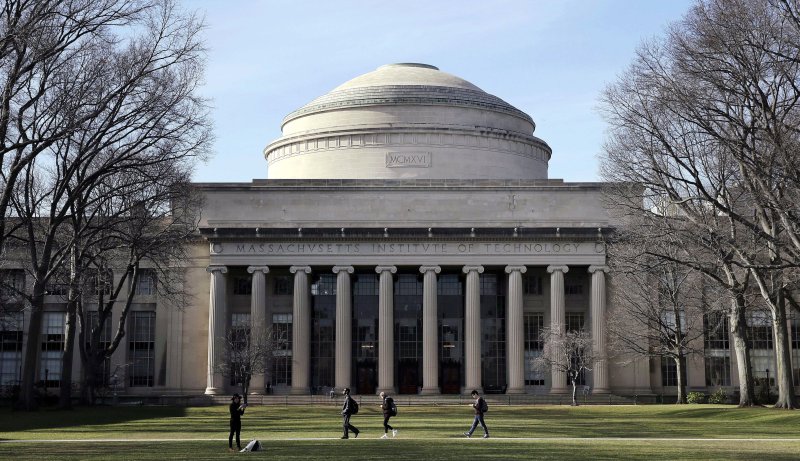
The nine universities that received the letters are as the following: Dartmouth College, the University of Pennsylvania, Massachusetts Institute of Technology (MIT), Brown University, Vanderbilt University, University of Arizona, University of South California (USC), the University of Texas, and the University of Virginia. Of these, MIT declined to sign, asserting that scientific research funding should be based solely on scientific merit, not political ideology.

Hot this week

Unlocking the Power of Intel Core Series 2: A Comprehensive Guide to Edge AI Solutions

Intel unveils Core Processor Series 2 and AI suite for healthcare, enhancing edge computing performance and reliability in industrial settings.

Samsung’s Record R&D Investment: How it is Shaping the Future of AI and Semiconductors

Samsung Electronics invested a record $25.33 billion in R&D to lead in AI and semiconductors, boosting its future tech capabilities.

How Rising Fuel Prices Impact Asian Airlines: A Comparison of FSC vs. LCC

Low-cost carriers are struggling to cope with rising fuel prices, lacking effective hedging strategies unlike major airlines.

SK Group Invests 630 Million USD AI Company

SK Group invests heavily in AI, aiming to transform into a leader in the AI market through a new U.S. investment firm.

Nvidia’s Jensen Huang Predicts 1000x Surge in AI Computing Demand

Nvidia's CEO highlights surging AI computing demand due to AI agents like OpenClaw, boosting memory chip demand from firms like Samsung.

Topics

Unlocking the Power of Intel Core Series 2: A Comprehensive Guide to Edge AI Solutions

Intel unveils Core Processor Series 2 and AI suite for healthcare, enhancing edge computing performance and reliability in industrial settings.

Samsung’s Record R&D Investment: How it is Shaping the Future of AI and Semiconductors

Samsung Electronics invested a record $25.33 billion in R&D to lead in AI and semiconductors, boosting its future tech capabilities.

How Rising Fuel Prices Impact Asian Airlines: A Comparison of FSC vs. LCC

Low-cost carriers are struggling to cope with rising fuel prices, lacking effective hedging strategies unlike major airlines.

SK Group Invests 630 Million USD AI Company

SK Group invests heavily in AI, aiming to transform into a leader in the AI market through a new U.S. investment firm.

Nvidia’s Jensen Huang Predicts 1000x Surge in AI Computing Demand

Nvidia's CEO highlights surging AI computing demand due to AI agents like OpenClaw, boosting memory chip demand from firms like Samsung.

How Samsung’s Galaxy S26 Series Leverages India’s R&D for Innovation

Samsung's R&D centers in India are key to developing the Galaxy S26, highlighting India's role in global tech innovation.

GPT-5.4 vs. GPT-5.2: What Makes OpenAI’s Latest Model a Game Changer?

OpenAI launched GPT-5.4, an AI model enhancing professional tasks with improved coding, reasoning, and tool integration capabilities.

Apple MacBook Air M5: Is the Price Increase Worth the AI Performance Boost?

Apple launches the MacBook Air with M5 chip, doubling storage and enhancing AI capabilities, starting from 1,223 USD.

Related Articles