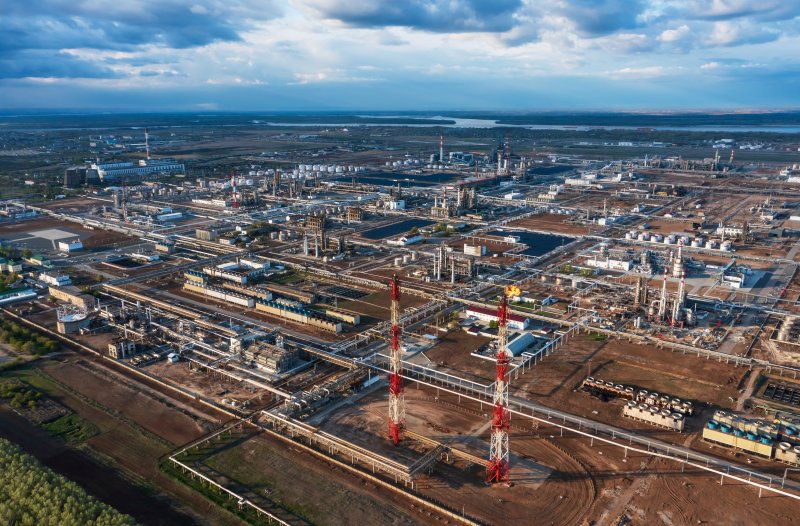
Ukraine is retaliating against Russian drone strikes by targeting key Russian oil facilities with its own unmanned aerial vehicles.
France 24 reported on the Sunday that Ukrainian drones hit two major facilities within a 48-hour period, including an attack on the Kirishi refinery in Russia’s northwestern Leningrad region. The Kirishi refinery, one of Russia’s largest, suffered a fire caused by debris from the assault.
Leningrad Governor Aleksandr Drozdenko confirmed that although air defenses intercepted three drones, falling debris caused a fire. He added that no injuries were reported.
On the same day, a facility owned by the Russian oil company Bashneft, located approximately 1,400 km from the border near Ufa, also sustained minor damage from a drone strike.
Ukraine’s drone command issued a statement confirming the successful operation against the refinery.
International media outlets reported that the full extent of the damage to the refinery has not yet been determined.
The Kirishi refinery, with a daily processing capacity of 355,000 barrels of crude oil, accounts for 6.4% of Russia’s total refining output.
Russia, meanwhile, claimed to have intercepted over 80 Ukrainian drones during this wave of attacks.
Ukraine’s attacks on Russian oil facilities have been increasing recently, with a significant surge since August. These strikes aim to disrupt fuel supplies within Russia and drive up domestic oil prices, a challenge compounded by Western sanctions that complicate repair efforts.
The U.S. White House estimates that Ukraine has managed to disable 20% of Russia’s refining capacity.
The United States is demanding that North Atlantic Treaty Organization (NATO) allies cease purchasing Russian oil, a critical source of funding for Moscow’s war effort.
U.S. President Donald Trump took to Truth Social on September 13, expressing shock that some NATO members continue to buy Russian oil.
Among NATO members, Turkey, Hungary, and Slovakia still maintain energy imports from Russia.