The U.S. Donald Trump administration has begun improving immigration and visa policies for foreign companies investing in the U.S. This move follows the detention of 300 South Korean workers at the Hyundai Motor-LG Energy Solution joint battery plant.
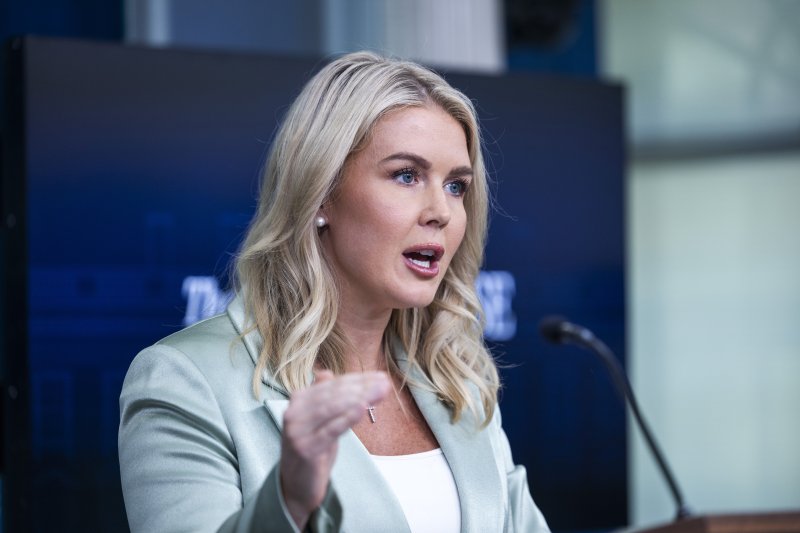
On Tuesday, when asked about measures to prevent a recurrence of the incident, White House Press Secretary Karoline Leavitt stated that the Department of Homeland Security and the Department of Commerce are working together on this issue. The Department of Homeland Security oversees immigration policies, while the Commerce Department handles foreign corporate investments in the U.S.
The collaboration between these two departments – which respectively manage hardline immigration policies and negotiations for trade, tariffs, and investment – suggests that the Trump administration recognizes the institutional contradictions exposed by this incident. Trump himself has addressed the situation twice, first responding to reporters on September 7, and then posting about it on Truth Social, underscoring the seriousness of the matter.
Trump’s statement is particularly noteworthy: “We encourage you to LEGALLY bring your very smart people, with great technical talent, to build World Class products, and we will make it quickly and legally possible for you to do so.” This indirectly acknowledges the challenges companies investing in the U.S. have been facing difficulties in recruiting professional and technical personnel due to stricter visa policies, which ultimately led to stopgap measures like those seen in this case.
In fact, the shortage of skilled workers in advanced industries has been a long-standing issue in the U.S. Moreover, companies investing in the U.S. need to minimize the time between constructing a factory and starting production. This often necessitates bringing in workers from their home countries, as seen with the Korean workers at the Hyundai Motor-LG Energy Solution plant, who can communicate effectively and work together seamlessly.
Going forward, the Department of Commerce is likely to request that the Department of Homeland Security consider these realities and make exceptions for professional and technical personnel in specific fields, such as expanding the issuance of E-2 or E-3 visas, or increasing country-specific quotas for H-1B visas for foreign professionals. These changes have been persistently requested by South Korean companies investing in the U.S.
In this regard, Arius Derr, Director of Communications at the Korea Economic Institute (KEI), previously argued that the U.S. Congress should create new professional visas specifically for South Korean nationals. He also suggested that the U.S. government should consider more flexible visa policies, such as expanding the scope of activities permitted for B-1 visa holders, many of whom were detained at the Hyundai Motor-LG Energy Solution plant.
However, even if visa issuance for urgent specialized positions is expanded, the Trump administration’s core “America First” policy is likely to remain unchanged. This means that ultimately, the focus will be on increasing the hiring of American workers locally.
Trump emphasized that the way to develop high-level talent is to bring in skilled individuals temporarily to train Americans. Leavitt echoed this, stating, “He expects these foreign companies to hire American labor. The president expects foreign and American workers to work together, training and teaching each other.”
As a result, it is likely that any relaxation or expansion of visa policies will come with conditions, such as requiring companies to hire a certain number of Americans or mandating technology transfer and training programs to develop the domestic workforce.