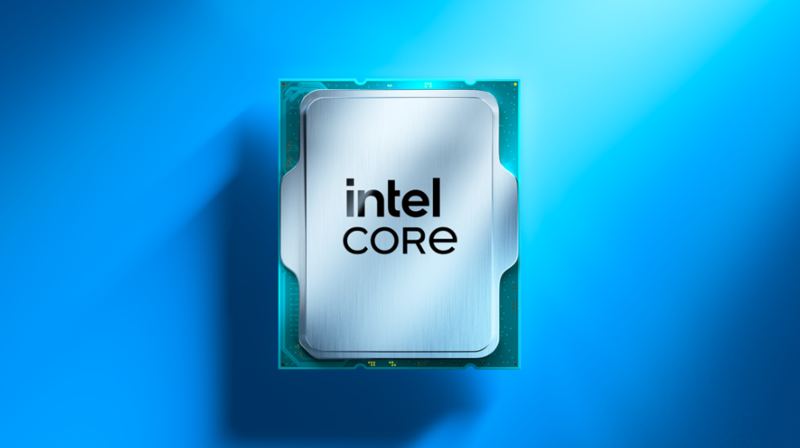
Intel Corporation announced on March 10 that it unveiled the Intel Core Processor Series 2 featuring P-cores, an industrial platform designed for edge applications, at the Embedded World 2026 event in Nuremberg, Germany.
Concurrently, Intel announced its latest edge artificial intelligence (AI) product line for healthcare and life sciences. This suite provides validated reference pipelines and benchmarking tools for AI-driven patient monitoring solutions.
Dan Rodriguez, Vice President of Intel Corporation’s Edge Computing Group, stated, “Intel continues to lead in edge computing, which remains one of our fastest-growing business segments,” adding, “With the introduction of Core Series 2, our CES launch of Core Ultra Series 3, and our expanding Edge AI Suites, we continue to deliver comprehensive platforms that meet diverse edge customer needs with breakthrough performance, reliability, and integrated AI acceleration.”
The Intel Core Series 2 processors are engineered to address key challenges in modern industrial settings. These environments must simultaneously manage various critical workloads, from safety-critical control systems to real-time data processing, while maintaining precise timing and deterministic performance. Traditional processors often forced a choice between computational power and real-time reliability, necessitating costly and complex multi-processor architectures. Intel Core Series 2 processors fundamentally improve upon these limitations, offering up to 4.4 times lower maximum PCIe latency, 2.5 times better deterministic response times, 3.8 times improved deterministic performance, and 1.5 times higher multi-threaded performance compared to the AMD Ryzen 7 9700X, meeting both performance and stability requirements in industrial settings.
Intel previewed its Healthcare and Life Sciences AI Suite, focusing on AI-based patient monitoring. As patient numbers rise and medical staff shortages intensify, patient monitoring is rapidly evolving from single devices to intelligent connected ecosystems. This shift is driving demand for AI-based solutions that provide faster insights and reliable operations in real-world environments. The suite demonstrates simultaneous multimodal workloads running locally on Intel processors, including AI-based ECG arrhythmia detection, remote photoplethysmography, and anonymized 3D visual tracking. It allows platform evaluation based on representative scenarios that reflect actual usage environments.
Alongside the recently launched Intel Core Series 3 processors, the Core Ultra Series 2 processors equipped with P-corses and the new healthcare and life sciences edge AI suite, exemplify Intel’s comprehensive edge portfolio. This lineup addresses a wide spectrum of customer needs, from deterministic real-time control to advanced AI acceleration, and is poised to drive innovation across manufacturing, healthcare, and next-generation edge applications.