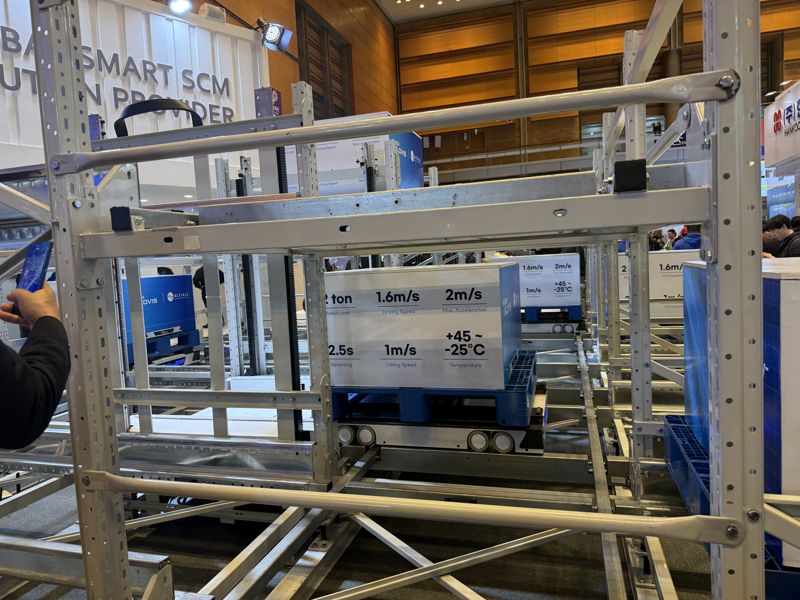
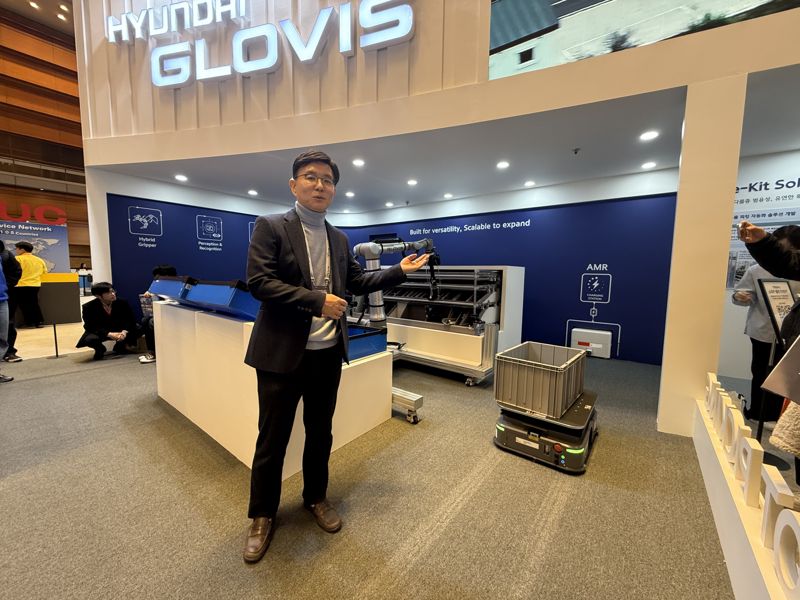
The pallet shuttle glides silently along the rails with a faint whir, operating without human intervention. Nearby, autonomous mobile robots (AMRs) transport parts boxes along pre-programmed routes. At the end of the line, a robotic arm precisely picks up items of various shapes and materials, moving them to storage locations. This is a glimpse into the future of Hyundai Glovis, the company slated to be the first to deploy Boston Dynamics’ humanoid robot, Atlas. The company has evolved from a shipping firm focused on car carriers to a comprehensive global supply chain management (SCM) provider, now fully equipped with advanced logistics software.
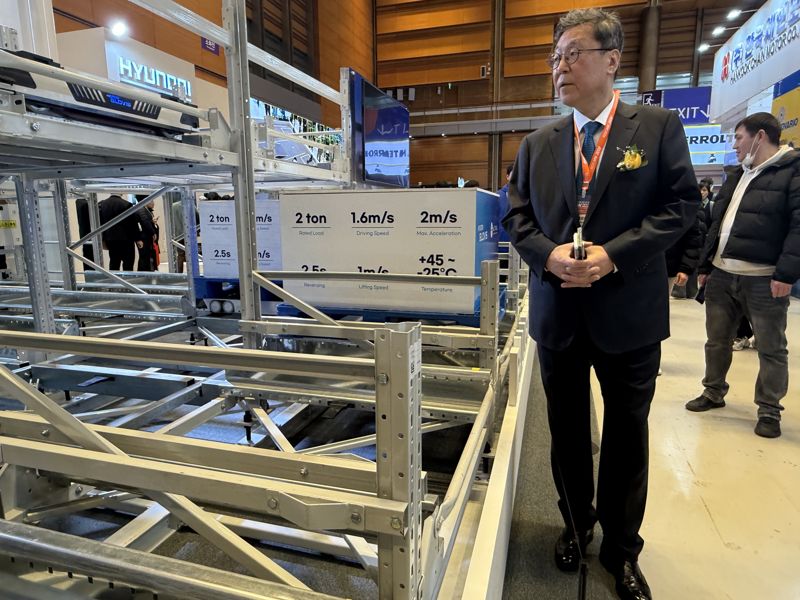
Concept validation complete: ORCA 2.0 ready for real-world application
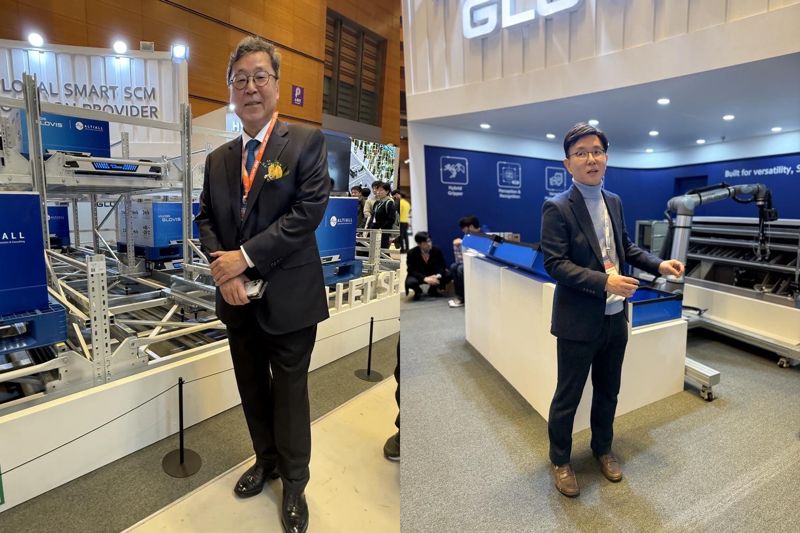
At the 2026 Smart Factory & Automation Industry Exhibition (AW 2026) in Seoul on March 4, Hyundai Glovis CEO Lee Gyu-bok explained to reporters, “While various hardware from multiple vendors enters a single warehouse, our warehouse control system (WCS) platform ORCA, developed with our subsidiary Altiol, serves as a unified control system. Unlike traditional automation companies that supplied equipment piecemeal without connecting the entire process, we have optimized the workflow from receiving to shipping with our WCS. Our goal is to catch up with industry frontrunners and become a ‘provider’ in logistics automation.”
ORCA is the result of Hyundai Glovis’ efforts to internalize automation, following its acquisition of 70% stake in logistics automation specialist Altiol in 2023. After moving beyond the proof of concept (PoC) phase last year, the system has now entered the stage of real-world application. When goods enter the warehouse, pallets equipped with transport robots automatically move along rails to deliver items to designated storage locations. During shipping, the process is reversed to transport items to the shipping point. ORCA oversees and controls this entire operation.
Hyundai Glovis is maximizing efficiency and reliability through long-term operations, going beyond just constructing logistics facilities. This is achieved through a subscription-based OPEX (operational expenditure) model, rather than just by receiving payment for construction. CEO Lee explained, “When we build a logistics center, we provide the software, and clients can choose their preferred hardware. This system can also be applied to existing logistics centers.” He noted, “Implementing this system has led to improved efficiency in logistics equipment. We are reducing the paperwork and coding burdens for our logistics center staff, allowing them to focus on more valuable tasks. This has cut down on overtime and enabled more time for customer care.”
Hyundai Glovis’s ORCA 2.0 is built on a GUI (graphical user interface) foundation. It minimizes coding dependencies, allowing field engineers to intuitively configure and modify equipment control logic. Executive Director Han Kyu-heon of the Future Logistics Technology Center explained, “This enhances both implementation speed and maintenance efficiency. It’s a fundamental shift from the past, where even a single line of code change required calling in the headquarters development team. We’ve created a platform that speaks the language of the logistics field.”
The demonstration of the integration between autonomous mobile robots (AMRs) and the self-developed One-Kit Picking Automation Technology also drew significant attention. As AMRs transport items, a robotic arm picks them up and moves them to storage locations. A single robot successfully grasped parts of various shapes, sizes, and materials – from bolts to plastic covers to metal brackets. This showcase illustrates that long-standing challenges in logistics automation are being effectively addressed.
Han stated, “The key lies in combining precision recognition based on 3D matching technology with a hybrid gripper structure. We accurately recognize object positions and shapes through 3D matching, while our modified hybrid gripper reliably picks them up. Rather than relying solely on AI algorithms, the backbone of the system is the optimization of recognition technology and mechanical structure.”
He added,”We are internally developing AI-based automated grasping automation technology to expand our non-affiliated customer base. Our plan is to enhance our capabilities to handle diverse and rapidly changing environments, moving beyond our current focus on automotive parts.”
Physical AI: A game-changer in perception
Hyundai Motor Group has announced a record-breaking investment of approximately $135.87 million in South Korea over the next five years, signaling its transformation into a leading Physical AI company. The introduction of the Boston Dynamics Atlas robot at CES 2026 aligns with this strategic shift. Currently, a parts sequencing proof of concept is underway at Hyundai Glovis’s facilities within the Meta Plant America (HMGeneral MotorsA), with plans to prioritize implementation in processes verified for safety and quality by 2028.
Han emphasized the profound impact on perception. “This is not merely about introducing a single robot. It’s about fundamentally altering the entire operational system,” he stated. “Customers will experience a systematic change that reduces work variability and ensures stable operations even amid workforce fluctuations. It goes beyond implementing automated equipment to standardizing operations and enhancing overall visibility.”
However, Han identified three key challenges to achieving end-to-end (E2E) logistics automation: the diverse structures and industry-specific needs of logistics centers, uncertainty about acutal operational improvements relative to initial investments, and variations in digital capabilities among client companies.
Hyundai Glovis’ approach focuses on operational flow rather than equipment alone. Han explained, “Drawing from our experience in managing procurement, production, and sales logistics as a seamless process, we design automation solutions that reflect industry-specific characteristics and on-site conditions.”
The pallet shuttle and One-Kit automation developed with Altiol exemplify a verification-based expansion strategy. By validating operational scenarios through WCS-based simulations and physical AI visualizations before implementation, Hyundai Glovis supports clients’ investment decisions with robust consulting capabilities. The goal is to collaboratively design environments where robots can operate effectively, not just to sell the robots themselves.
Han noted, “While Korea’s logistics automation level is competitive globally, complete end-to-end integration is still evolving. Forecasts suggest a potential 36% shortage in the logistics workforce by 2030. We are approaching automation as a crucial structural response, not just an option. Our strategy involves continuously enhancing operational efficiency through integrated control systems, data-driven operations, and comprehensive consulting, aiming to reduce reliance on manual labor.”