
Wednesday, March 18, 2026

Meta’s $100 Billion AI Semiconductor Deal with AMD: What It Means for the Future of AI

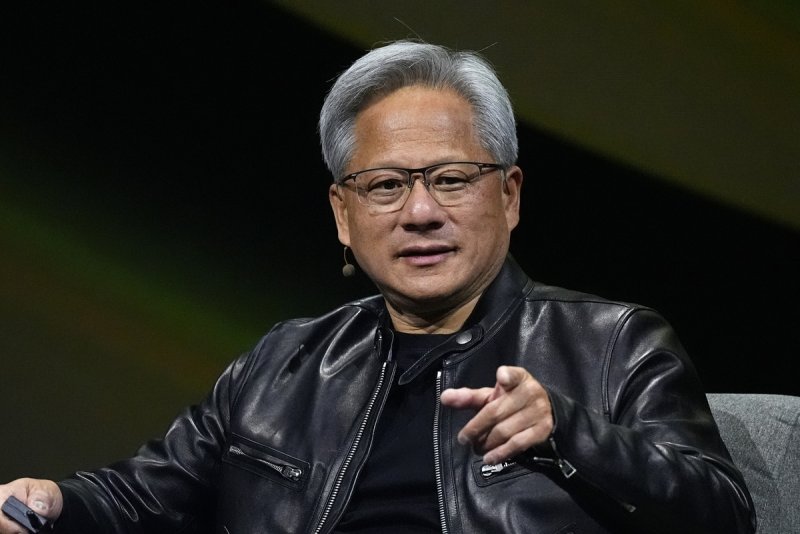
Jensen Huang, Nvidia CEO
Mark Zuckerberg, Meta CEO
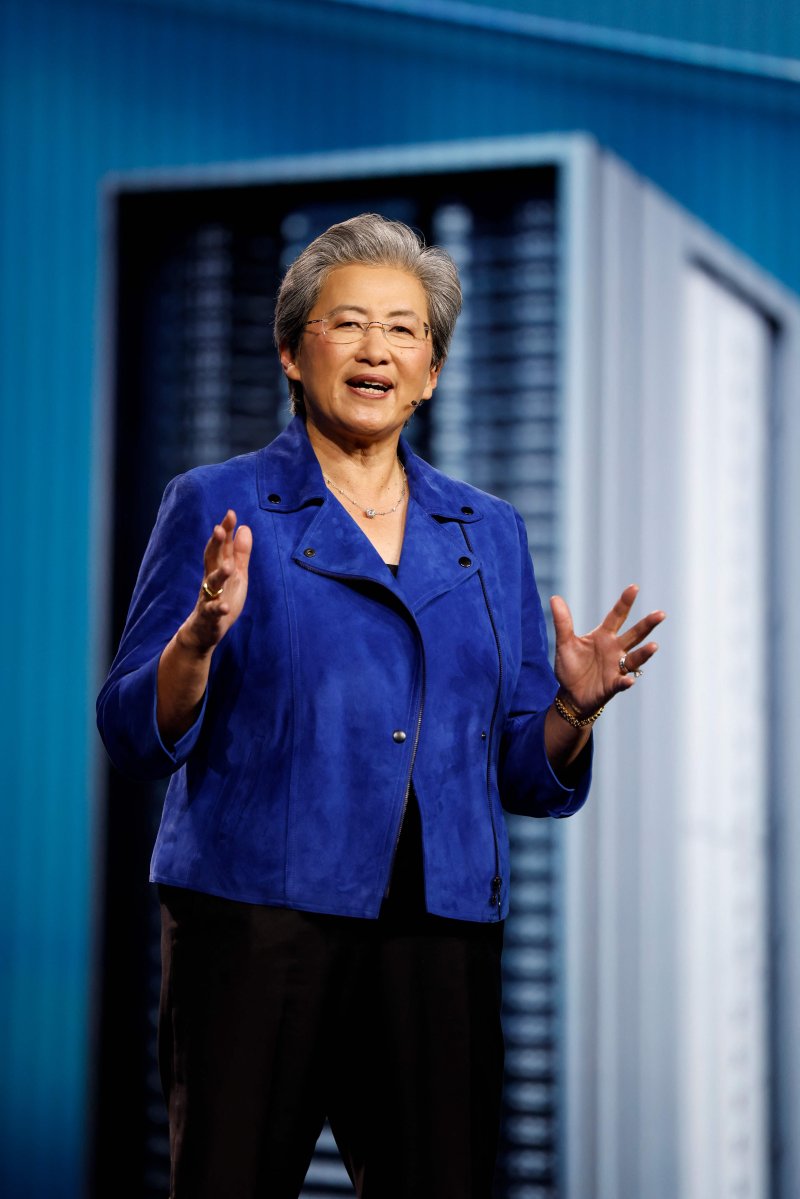
Lisa Su, AMD CEO
Lisa Su, AMD CEO

Meta, a leading AI company in the U.S., has announced plans to purchase additional units from Nvidia’s competitor AMD just a week after revealing its acquisition of AI semiconductors from Nvidia. This move appears to be a strategic effort to secure supplies in the increasingly competitive AI chip market.

According to the Wall Street Journal (WSJ), Meta and AMD announced on February 24 that AMD will supply Meta over the next five years with MI450 series graphics processing units (GPUs), EPYC central processing units (CPUs), and Helios server racks, which were first showcased at last month’s Consumer Electronics Show (CES 2026).

The hardware supplied by AMD will consume 6 gigawatts (GW) of power, based on the power usage of AI-driven data centers. These AI semiconductors are specialized GPUs designed for AI development and operation, combining special GPUs with high-bandwidth memory (HBM) chips.

The initial supply of 1 GW will begin in the second half of this year, with plans for gradual expansion. The WSJ estimates the contract value to exceed $100 billion. AMD’s CEO Lisa Su stated that the value per GW is in the tens of billions of dollars.

To secure Meta’s long‑term commitment, AMD has offered equity benefits. The WSJ reported that AMD will grant Meta options to buy up to 160 million shares, about 10% of its total stock, at 0.01 USD per share, based on actual purchase volumes and other conditions.

The WSJ also noted that Meta’s aggressive procurement of AI chips has intensified the semiconductor war among AI companies. On February 17, Meta signed a multi-year contract with Nvidia for millions of GPUs and CPUs. Local media reported in last October that Meta is also considering acquiring billions of dollars worth of Google’s Tensor Processing Units (TPUs) for its data centers by 2027.

Meta CEO Mark Zuckerberg emphasized that the AMD deal is aimed at building efficient inference computing and personal superintelligence, calling it a significant step in diversifying Meta’s computing resources.

The AI industry is currently facing a semiconductor shortage, prompting even Google, an AI service provider, to enter the AI chip market with its TPUs.

Mark Lipacis, an analyst at Evercore ISI, argued that Nvidia, which dominates the AI chip market, develops cutting-edge products but rarely increases production. AMD, while still behind Nvidia in overall AI GPU performance and market share, is steadily expanding its footprint in data center AI. OpenAI, a Google competitor, agreed to purchase 6 GW of AI chips from AMD last October.


Hot this week

Unlocking the Power of Intel Core Series 2: A Comprehensive Guide to Edge AI Solutions

Intel unveils Core Processor Series 2 and AI suite for healthcare, enhancing edge computing performance and reliability in industrial settings.

Samsung’s Record R&D Investment: How it is Shaping the Future of AI and Semiconductors

Samsung Electronics invested a record $25.33 billion in R&D to lead in AI and semiconductors, boosting its future tech capabilities.

How Rising Fuel Prices Impact Asian Airlines: A Comparison of FSC vs. LCC

Low-cost carriers are struggling to cope with rising fuel prices, lacking effective hedging strategies unlike major airlines.

SK Group Invests 630 Million USD AI Company

SK Group invests heavily in AI, aiming to transform into a leader in the AI market through a new U.S. investment firm.

Nvidia’s Jensen Huang Predicts 1000x Surge in AI Computing Demand

Nvidia's CEO highlights surging AI computing demand due to AI agents like OpenClaw, boosting memory chip demand from firms like Samsung.

Topics

Unlocking the Power of Intel Core Series 2: A Comprehensive Guide to Edge AI Solutions

Intel unveils Core Processor Series 2 and AI suite for healthcare, enhancing edge computing performance and reliability in industrial settings.

Samsung’s Record R&D Investment: How it is Shaping the Future of AI and Semiconductors

Samsung Electronics invested a record $25.33 billion in R&D to lead in AI and semiconductors, boosting its future tech capabilities.

How Rising Fuel Prices Impact Asian Airlines: A Comparison of FSC vs. LCC

Low-cost carriers are struggling to cope with rising fuel prices, lacking effective hedging strategies unlike major airlines.

SK Group Invests 630 Million USD AI Company

SK Group invests heavily in AI, aiming to transform into a leader in the AI market through a new U.S. investment firm.

Nvidia’s Jensen Huang Predicts 1000x Surge in AI Computing Demand

Nvidia's CEO highlights surging AI computing demand due to AI agents like OpenClaw, boosting memory chip demand from firms like Samsung.

How Samsung’s Galaxy S26 Series Leverages India’s R&D for Innovation

Samsung's R&D centers in India are key to developing the Galaxy S26, highlighting India's role in global tech innovation.

GPT-5.4 vs. GPT-5.2: What Makes OpenAI’s Latest Model a Game Changer?

OpenAI launched GPT-5.4, an AI model enhancing professional tasks with improved coding, reasoning, and tool integration capabilities.

Apple MacBook Air M5: Is the Price Increase Worth the AI Performance Boost?

Apple launches the MacBook Air with M5 chip, doubling storage and enhancing AI capabilities, starting from 1,223 USD.

Related Articles