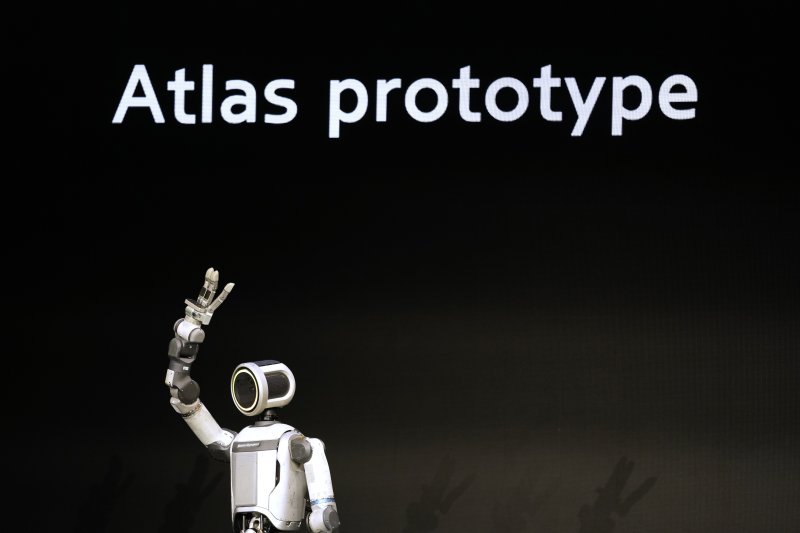
Industry experts predict that Hyundai Motor Group’s advancements in autonomous driving and physical artificial intelligence (AI) will gain significant traction in the latter half of this year. Hyundai Motor aims to refine its “learn-verify-deploy” system, with the Atlas humanoid robot at its core. Meanwhile, Kia is expected to leverage its stake in Boston Dynamics (BD) to align with the shift towards software-defined vehicles (SDVs) and the commercialization of autonomous driving.
On February 25, Heungkuk Securities projected that autonomous driving momentum will become more apparent in the second half of this year, noting Hyundai’s evolution into a global physical AI powerhouse.
Heungkuk Securities analyst Ma Geon-woo highlighted that with the anticipated mass production of Atlas in 2028 and the implementation of the Robotics Meta Plant Application Center (RMAC, the roadmap for learning, verification, and field deployment is becoming concrete. He emphasized Hyundai’s competitive edge, citing its captive production base at Meta Plant America (HMGeneral MotorsA) as crucial for early reference acquisition and operational data accumulation.
Ma added that BD’s hardware prowess, now enhanced by Google DeepMind’s AI capabilities, positions it as a global frontrunner in robotics. He also pointed to the planned launch of SDV test vehicles (Pace Car) and the commercialization of Motional’s Level 4 robotaxi service in the latter half of 2026.
Analysts particularly note that Nvidia’s Alpamayo integration is expected to accelerate SDV transition and mass production. They suggest that if the specific scale and timing for the deployment of Ioniq 5 units to Waymo are disclosed, it is expected to further visualizerobotaxi momentum and increase expectations for HMGMA’s utilization rates.
Kia, with its 16.7% stake in BD, is projected to follow a similar timeline in transitioning to SDVs, potentially driving its next phase of growth. The company is well-positioned to capitalize on the physical AI trend.
Currently, Kia has presented aggressive guidance based on its new vehicle lineup. Ma observed that even before the January launch of the Telluride hybrid electric vehicle (HEV), Kia’s market share in the U.S. surpassed Hyundai’s, confirming its strong growth trajectory in North America. He noted that while growth remains robust in North America and India, Kia needs to accelerate sales of EV4 and EV5 models in Europe, complementing the impact of new EV2 models.