Wednesday, March 18, 2026

How NC AI is Revolutionizing Robotics with World Models in 2026

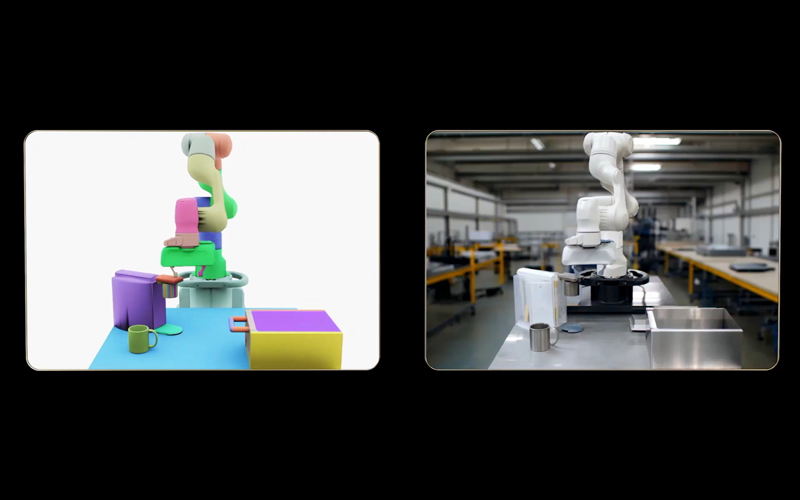
Gaming companies are entering the race to create robot brains, as their expertise in real-time simulation of virtual world physics is proving directly applicable to building virtual environments for training robot behaviors.

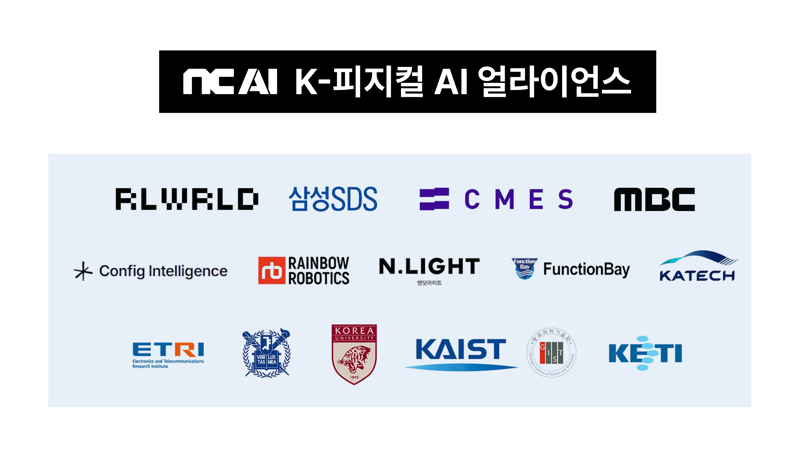
Industry sources reported on February 22 that NC AI, NCSoft’s AI-focused subsidiary, has officially joined the competition to develop world models, a key technology in Physical AI. NC AI recently formed the K-Physical AI Alliance consortium to participate in the “Development of World Foundation Model Technology for Physical AI Model Learning” project, overseen by the Institute of Information & Communications Technology Planning & Evaluation (IITP).

NCSoft’s entry into World Model development is backed by its game physics engine technology, which has enabled it to run virtual worlds with hundreds of thousands of simultaneous users in real-time. The reinforcement learning experience gained from massively multiplayer online role-playing games (MMORPGs) environments is particularly relevant to teaching robots optimal actions in complex real-world scenarios. Both processes rely on improving behavior through trial and error in virtual environments.

The shift in Physical AI competition from algorithms to securing physical data also opens doors for game companies. Unlike text-based generative AI, the behavioral data needed for robots to perform real-world tasks is challenging and expensive to obtain. In industrial settings, repeated experiments for robots to learn new tasks can risk equipment damage and reduced productivity.

Virtual spaces, however, can repeatedly generate diverse task scenarios, including disaster situations and irregular process conditions that are difficult to replicate in real life, enabling robots to amass crucial learning data before real-world deployment.

NCSoft is leveraging its game physics engine-based simulation technology to create a robot intelligence learning platform for manufacturing and logistics applications. Its strategy aims to enhance robot task performance by utilizing data from domestic manufacturing sites, including semiconductor and automotive industries, for AI training.

The K-Physical AI Alliance consortium formed by NC AI includes robotics and simulation firms such as Function Bay and Rainbow Robotics, alongside companies such as Samsung SDS, POSCO DX, and Lotte Innovate. These companies plan to conduct technology demonstrations in factory and logistics settings in the near future.

Hot this week

Unlocking the Power of Intel Core Series 2: A Comprehensive Guide to Edge AI Solutions

Intel unveils Core Processor Series 2 and AI suite for healthcare, enhancing edge computing performance and reliability in industrial settings.

Samsung’s Record R&D Investment: How it is Shaping the Future of AI and Semiconductors

Samsung Electronics invested a record $25.33 billion in R&D to lead in AI and semiconductors, boosting its future tech capabilities.

How Rising Fuel Prices Impact Asian Airlines: A Comparison of FSC vs. LCC

Low-cost carriers are struggling to cope with rising fuel prices, lacking effective hedging strategies unlike major airlines.

SK Group Invests 630 Million USD AI Company

SK Group invests heavily in AI, aiming to transform into a leader in the AI market through a new U.S. investment firm.

Nvidia’s Jensen Huang Predicts 1000x Surge in AI Computing Demand

Nvidia's CEO highlights surging AI computing demand due to AI agents like OpenClaw, boosting memory chip demand from firms like Samsung.

Topics

Unlocking the Power of Intel Core Series 2: A Comprehensive Guide to Edge AI Solutions

Intel unveils Core Processor Series 2 and AI suite for healthcare, enhancing edge computing performance and reliability in industrial settings.

Samsung’s Record R&D Investment: How it is Shaping the Future of AI and Semiconductors

Samsung Electronics invested a record $25.33 billion in R&D to lead in AI and semiconductors, boosting its future tech capabilities.

How Rising Fuel Prices Impact Asian Airlines: A Comparison of FSC vs. LCC

Low-cost carriers are struggling to cope with rising fuel prices, lacking effective hedging strategies unlike major airlines.

SK Group Invests 630 Million USD AI Company

SK Group invests heavily in AI, aiming to transform into a leader in the AI market through a new U.S. investment firm.

Nvidia’s Jensen Huang Predicts 1000x Surge in AI Computing Demand

Nvidia's CEO highlights surging AI computing demand due to AI agents like OpenClaw, boosting memory chip demand from firms like Samsung.

How Samsung’s Galaxy S26 Series Leverages India’s R&D for Innovation

Samsung's R&D centers in India are key to developing the Galaxy S26, highlighting India's role in global tech innovation.

GPT-5.4 vs. GPT-5.2: What Makes OpenAI’s Latest Model a Game Changer?

OpenAI launched GPT-5.4, an AI model enhancing professional tasks with improved coding, reasoning, and tool integration capabilities.

Apple MacBook Air M5: Is the Price Increase Worth the AI Performance Boost?

Apple launches the MacBook Air with M5 chip, doubling storage and enhancing AI capabilities, starting from 1,223 USD.

Related Articles