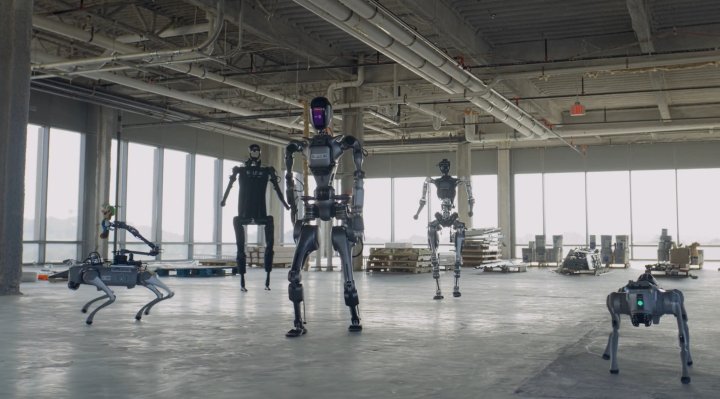
Samsung Electronics is expected to accelerate its humanoid robot business, beginning with industrial manufacturing robots.
During a recent earnings call on January 29, the company announced its intention to deliver results in the humanoid robot sector this year as part of its future-focused initiatives. Samsung also committed to ongoing investment in its four key emerging business areas – climate solutions, automotive technology, and medical technology – to maintain its leadership in cutting-edge technologies.
Internally, Samsung Electronics is shifting its focus from household robots like Ballie to industrial robots capable of practical deployment in manufacturing environments, similar to Hyundai’s Atlas and Tesla’s Optimus. Roh Tae-moon, President of Samsung Electronics’ Device Experience (DX) Division, emphasized at a CES 2026 briefing earlier this month that the company’s top priority is automating Samsung’s global manufacturing sites. He stated, “Manufacturing environments provide the ideal setting for robots to accumulate data and enhance their capabilities.”
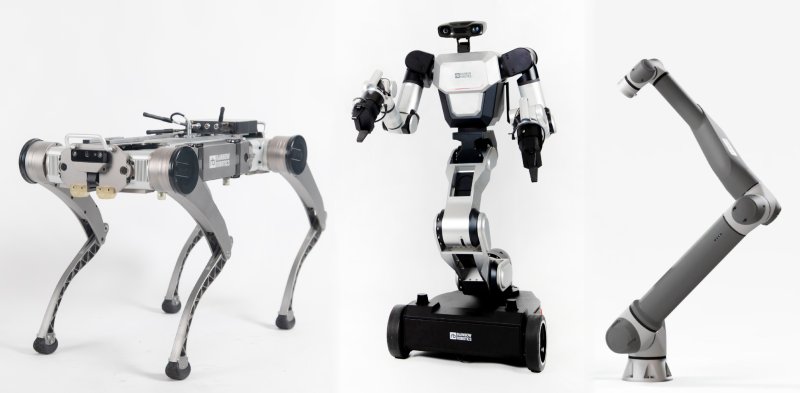
In practice, Rainbow Robotics is expanding its collaboration by co-developing robotic automation systems for welding and heavy lifting at Samsung Heavy Industries’ Geoje shipyard. Industry analysts believe Samsung Electronics is formulating a phased strategy, first entering the global logistics and industrial (B2B) market based on robotic pilot programs across various manufacturing lines within the group, and subsequently expanding into the consumer (B2C) market.
Rainbow Robotics, which became a Samsung Electronics subsidiary early last year, is reportedly serving as a “secret weapon” in this initiative. Late last year, Samsung also became a strategic investor in Skild AI, an American robotics AI startup. As global competition in humanoid robotics intensifies, Samsung Electronics is keeping its options open for potential mergers and acquisitions (M&A) with competitive robotics companies.
Samsung Electro-Mechanics, another Samsung Electronics subsidiary, is actively exploring entry into the field of robotic joint actuators, a critical component in robotics.
Chang Deok-hyun, President of Samsung Electro-Mechanics, recently noted that the company’s expertise in electronic components like sensors and cameras aligns well with humanoid robotics. He highlighted that hands and arms pose the greatest challenge in humanoid robots, and the company is considering expansion into these areas. Samsung Electro-Mechanics recently made a multi-million euro investment in Norway’s Alva Industries, which specializes in ultra-compact, high-performance electric motors—a move widely interpreted as positioning for market entry.