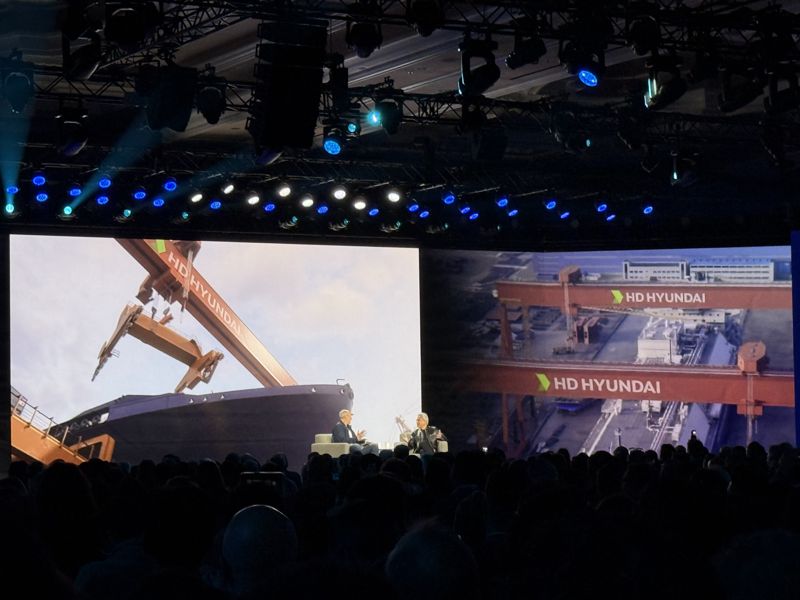
The future of industry was on full display at CES 2026, which wrapped up on January 9 in Las Vegas.
A robot handles dangerous welding tasks at a high-altitude construction site, while autonomous vehicles shuttle luggage through airports. Before operating an excavator, workers consult AI for equipment status and optimal work methods. Virtual factories run simulations without disrupting actual production, and massive harvesters plot their own courses across farmlands.
While consumer humanoid robots for households dominated headlines, industrial applications revealed a profound AI revolution. The event showcased how AI is transforming industrial settings, with smart machines enhancing worker safety and efficiency across sectors.
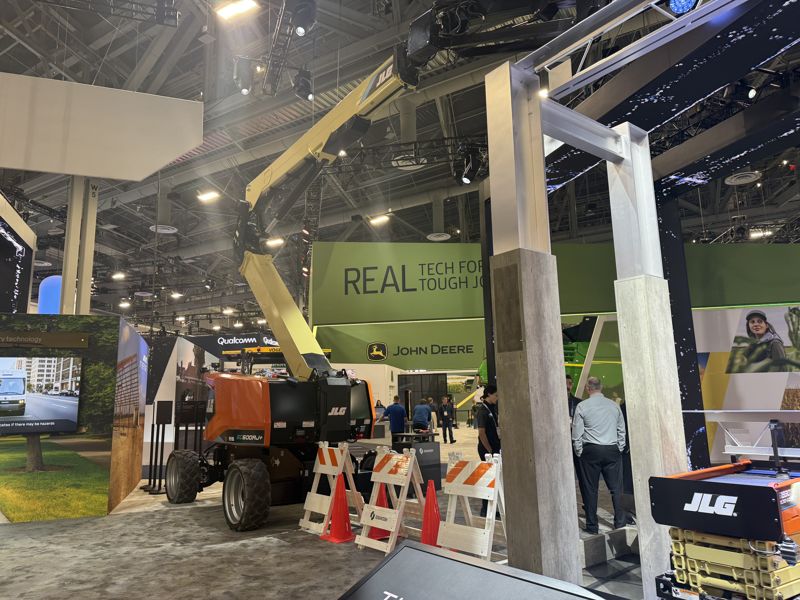
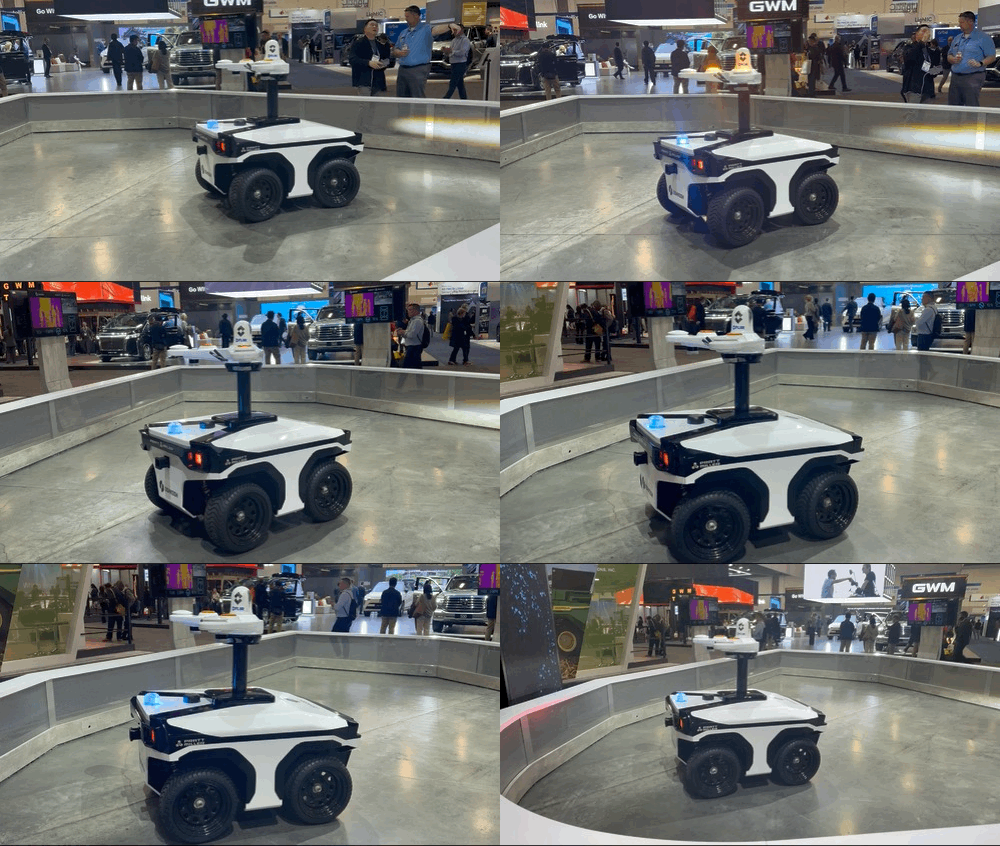
U.S. industrial giant Oshkosh Corporation showcased the “Boom Lift,” an AI-enabled robot designed to perform welding at dangerous heights. An Oshkosh representative stated that the Boom Lift can precisely identify the location and perform automated welding, eliminating the need for human workers in dangerous elevated positions. The company also presented autonomous luggage-carrying robots for airports and AI safety systems to protect first responders from road accidents.
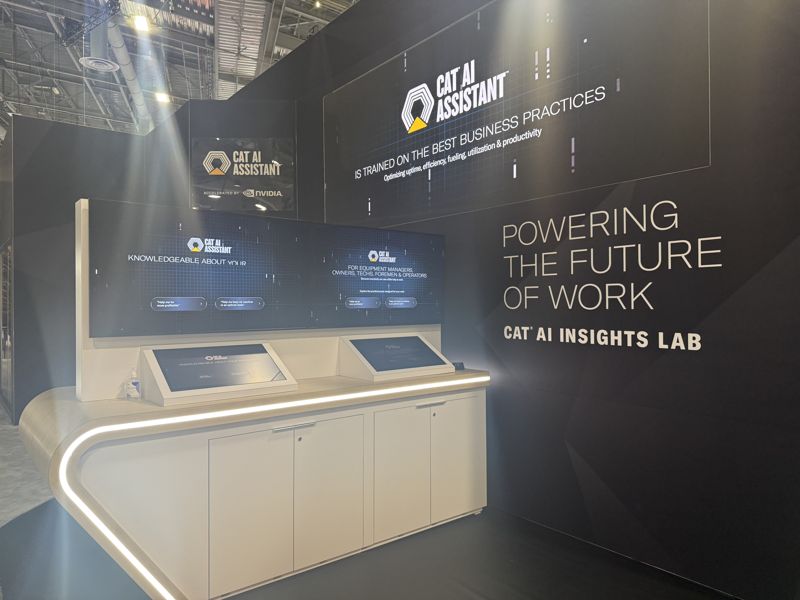
U.S. construction equipment company Caterpillar highlighted its AI-based “Cat AI Assistant,” which provides real-time guidance on excavator settings, work methods, equipment status, and maintenance schedules, significantly improving operational efficiency.
Siemens CEO Roland Busch used his CES keynote to underscore the transformative potential of AI-integrated digital twins, spotlighting a collaboration with NVIDIA on a digital twin of HD Hyundai Heavy Industries’ shipyard. NVIDIA CEO Jensen Huang praised the project, stating, “It’s a perfect illustration of our digital twin concept, with every aspect of the ship, down to individual bolts and nuts, replicated virtually.” Siemens featured live demonstrations of its Siemens Xcelerator platform, which integrates diverse manufacturing process data.
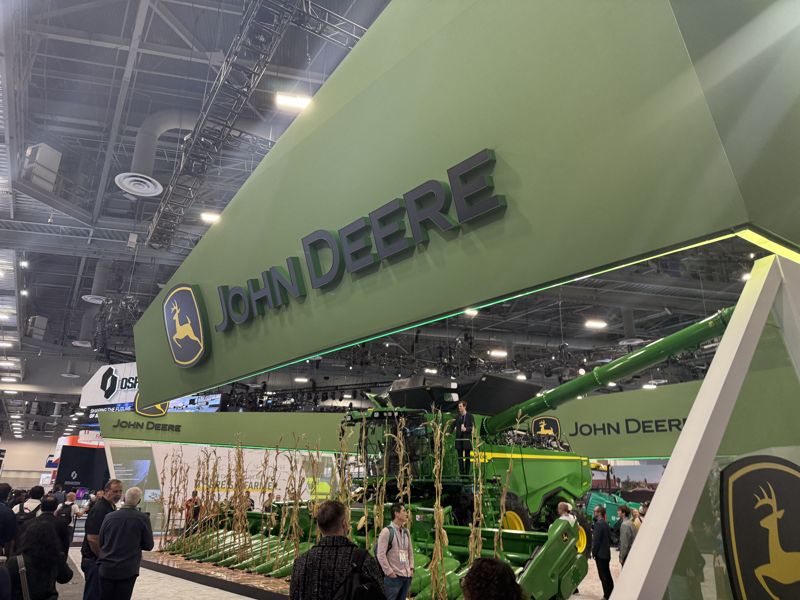
The agricultural sector is also undergoing an AI revolution. John Deere displayed an massive harvester equipped with autonomous driving capabilities, using advanced cameras and GPS technology to calculate optimal paths and makes movement decisions independently.
South Korean companies also made their mark, presenting not only futuristic humanoids but also practical AI solutions for immediate industrial application. Doosan Robotics unveiled “Scan & Go,” an innovative platform combining a robotic arm with an autonomous mobile robot (AMR). Utilizing physics-based AI and 3D vision technology, Scan & Go can perform a wide range of tasks independently. This physics-based AI approach, which incorporates the robot’s physical characteristics like joint movements and friction into its learning process, promises enhanced reliability and efficiency.