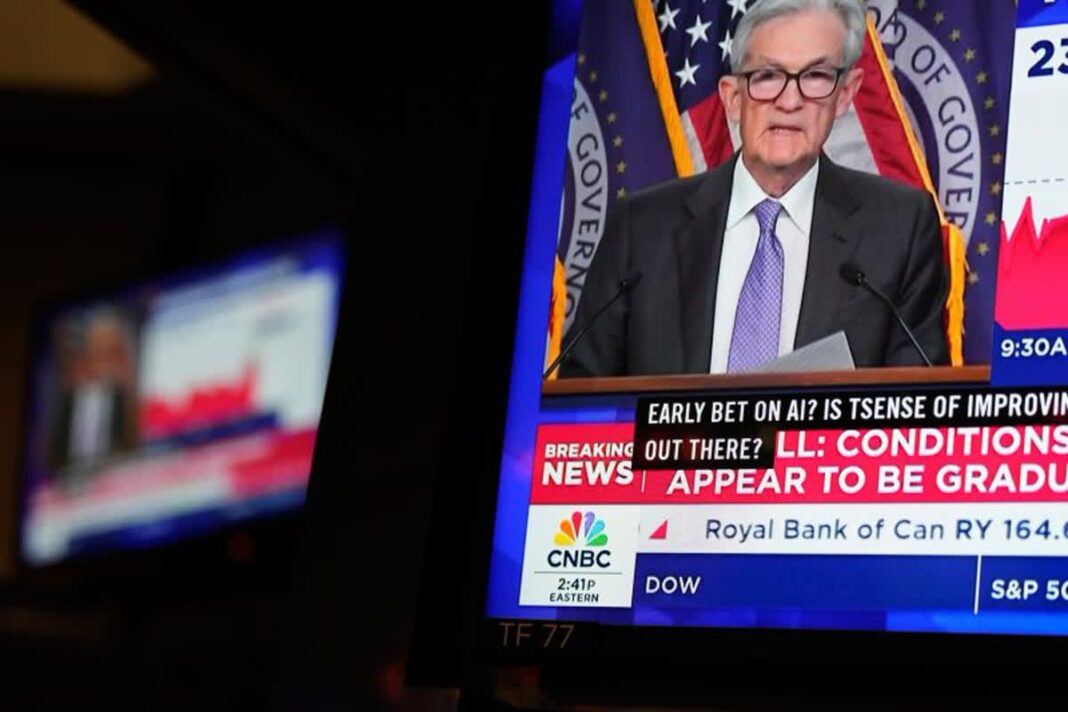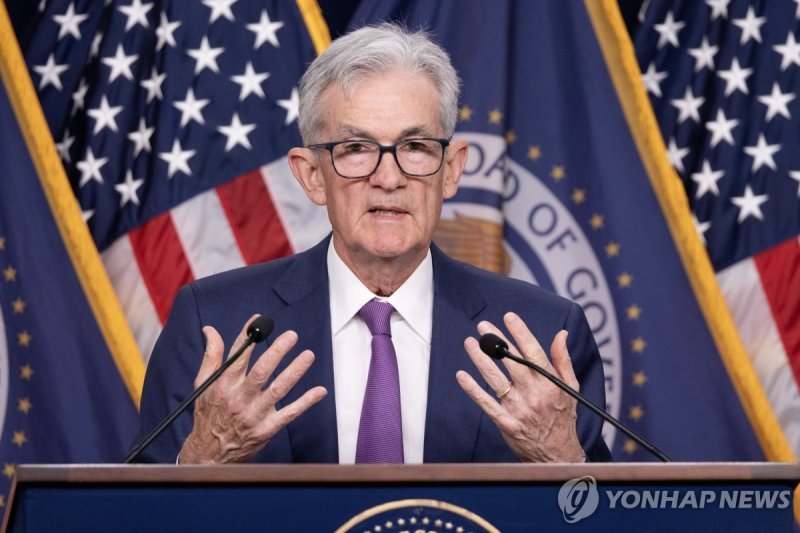
On Wednesday, the U.S. Federal Reserve convened a Federal Open Market Committee (FOMC) meeting and voted to cut the benchmark interest rate by 0.25 percentage points. Consequently, the U.S. benchmark rate dropped from 3.75-4.00% to 3.50-3.75%, marking the third consecutive rate cut following reductions in September and October. This narrowed the interest rate gap with South Korea, where rates currently stand at 2.50%, to 1.25 percentage points.
The U.S. rate cut was primarily driven by concerns over slowing domestic job growth. While experts initially projected a November job increase of around 40,000, the economy actually shed 32,000 jobs. Large corporations boosted hiring, but small businesses with fewer than 50 employees cut 120,000 jobs, highlighting a more severe employment shock in the small and medium-sized enterprise sector.
Financial markets responded positively to the rate cut, with tech stocks leading gains across all three major U.S. indices. The narrowing interest rate differential between the U.S. and South Korea eased worries about capital outflows, helping to stabilize the won-dollar exchange rate. However, one should not attach too much significance to the short-term market reactions, as fundamental concerns like the tech stock bubble and dollar concentration persist.
Above all, it is unlikely that the Fed will maintain a prolonged rate-cutting cycle. Fed Chair Jerome Powell stated post-announcement that the current benchmark rate falls within the neutral range, signaling he would watch economic trends for the time being. While a rate cut is usually perceived as a dovish measure, this rate cut is being characterized as “hawkish” due to the simultaneous hint at a potential future rate freeze.
The Bank of Korea (BOK) shifted from rate hikes to cuts last October after years of tightening to combat high inflation. With further cuts in February and May, the current rate stands at 2.50%. Youth employment has declined for 19 consecutive months, and the number of economically inactive 30-somethings hit a record high last month. Prolonged weakness in manufacturing and construction continues to erode job quality. These factors suggest South Korea might consider additional rate cuts to boost employment.
However, exchange rates and housing prices pose significant challenges. The won-dollar rate surged to 1,477 KRW last month and has hardly turned toward stability. Simultaneous overseas investments by the National Pension Service, asset managers, and individuals have dramatically increased dollar demand. In this situation, further BOK rate cuts could widen the U.S.-Korea interest rate gap, potentially accelerating capital outflows. Despite three rounds of government real estate measures, persistent housing market instability complicates rate cut decisions.
The benchmark rate serves as a critical monetary policy tool, influencing interest rates set by financial institutions and directly impacting household and business economic activities. Stable exchange rates and housing prices are crucial for effective monetary policy that guides market funds toward productive investments and consumption.
The government should consider implementing foreign currency liquidity regulations to mitigate concentrated foreign currency demand and address the supply-demand imbalance caused by surging overseas investments.
In the real estate market, maintaining consistent tax and loan policies is essential to temper expectations, while steadily expanding housing supply. Only with stable exchange rates and housing prices can monetary policy effectively respond to economic challenges.