Wednesday, March 18, 2026

Samsung Heavy Industries Expands US Collaboration: What’s Next for the Next Generation Logistics Ship?

Samsung Heavy Industries is intensifying its collaboration with U.S. partners for the MASGA (Making American Shipbuilding Great Again) initiative, a joint Korea-U.S. shipbuilding venture. The partnership aims to expand into joint construction of next-generation naval logistics vessels and LNG bunkering ships.

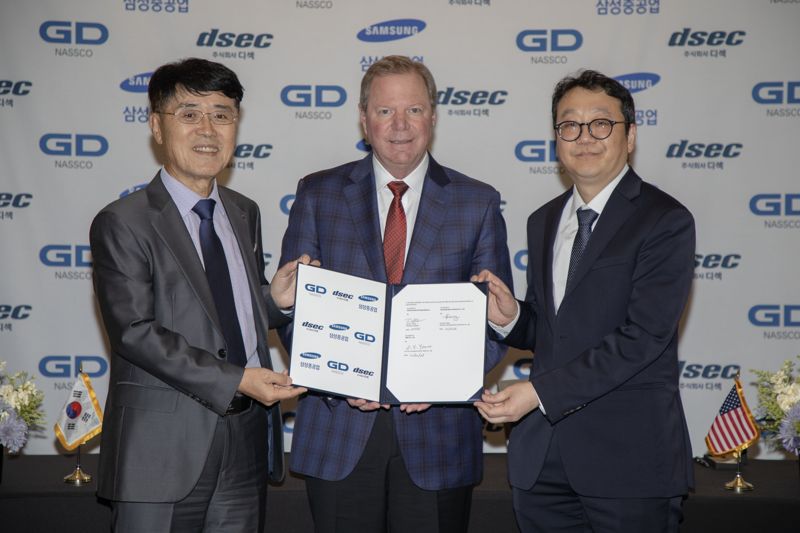
During the International WorkBoat Show held in New Orleans from Wednesday to Friday, Samsung Heavy Industries signed a trilateral business cooperation agreement with U.S. shipbuilder General Dynamics NASSCO and Korean engineering firm DSEC.

This agreement paves the way for collaboration in ship design, equipment and parts supply, and workforce development. The trio is also eyeing a joint bid for the U.S. Navy’s Next Generation Logistics Ship program.

These logistics vessels are designed to enhance rapid mobility and streamline supply operations for fuel, ammunition, and provisions.

San Diego-based NASSCO, a General Dynamics subsidiary, operates five shipyards across four states. The company is a major player in designing, building, and maintaining both naval support vessels and commercial ships, including container carriers.

DSEC, a South Korean marine engineering powerhouse, recently forged a strategic alliance with Samsung Heavy Industries to expand its global footprint, particularly in the U.S. market. DSEC and NASSCO’s 20-year strong partnership in ship design and equipment supply is expected to create powerful synergies in this three-way collaboration.

Samsung Heavy Industries also signed an MOU with Louisiana-based Conrad Shipyard for joint construction of LNG bunkering vessels. Conrad, with five shipyards in Louisiana and Texas, specializes in newbuilds, repairs, and modifications of various vessel types, including barges, tugboats, and government ships.

The two companies plan to participate in the U.S. LNG transportation market together through the construction of LNG bunkering vessels. Industry experts project strong growth in this sector, driven by LNG’s competitive pricing, rising demand for eco-friendly fuels, and increased investment in bunkering infrastructure.

These latest agreements expand Samsung Heavy Industries’ U.S. presence, building on its existing collaboration with Vigor Marine Group for MRO services on naval logistics vessels. The company is now positioned to jointly construct next-generation naval logistics ships and commercial LNG bunkering vessels.

A Samsung Heavy Industries spokesperson stated, “Our half-century of technological expertise will create powerful synergies through the MASGA initiative. By accelerating technology transfer and workforce development, we aim to significantly boost the competitiveness of the U.S. shipbuilding industry.”


Hot this week

Unlocking the Power of Intel Core Series 2: A Comprehensive Guide to Edge AI Solutions

Intel unveils Core Processor Series 2 and AI suite for healthcare, enhancing edge computing performance and reliability in industrial settings.

Samsung’s Record R&D Investment: How it is Shaping the Future of AI and Semiconductors

Samsung Electronics invested a record $25.33 billion in R&D to lead in AI and semiconductors, boosting its future tech capabilities.

How Rising Fuel Prices Impact Asian Airlines: A Comparison of FSC vs. LCC

Low-cost carriers are struggling to cope with rising fuel prices, lacking effective hedging strategies unlike major airlines.

SK Group Invests 630 Million USD AI Company

SK Group invests heavily in AI, aiming to transform into a leader in the AI market through a new U.S. investment firm.

Nvidia’s Jensen Huang Predicts 1000x Surge in AI Computing Demand

Nvidia's CEO highlights surging AI computing demand due to AI agents like OpenClaw, boosting memory chip demand from firms like Samsung.

Topics

Unlocking the Power of Intel Core Series 2: A Comprehensive Guide to Edge AI Solutions

Intel unveils Core Processor Series 2 and AI suite for healthcare, enhancing edge computing performance and reliability in industrial settings.

Samsung’s Record R&D Investment: How it is Shaping the Future of AI and Semiconductors

Samsung Electronics invested a record $25.33 billion in R&D to lead in AI and semiconductors, boosting its future tech capabilities.

How Rising Fuel Prices Impact Asian Airlines: A Comparison of FSC vs. LCC

Low-cost carriers are struggling to cope with rising fuel prices, lacking effective hedging strategies unlike major airlines.

SK Group Invests 630 Million USD AI Company

SK Group invests heavily in AI, aiming to transform into a leader in the AI market through a new U.S. investment firm.

Nvidia’s Jensen Huang Predicts 1000x Surge in AI Computing Demand

Nvidia's CEO highlights surging AI computing demand due to AI agents like OpenClaw, boosting memory chip demand from firms like Samsung.

How Samsung’s Galaxy S26 Series Leverages India’s R&D for Innovation

Samsung's R&D centers in India are key to developing the Galaxy S26, highlighting India's role in global tech innovation.

GPT-5.4 vs. GPT-5.2: What Makes OpenAI’s Latest Model a Game Changer?

OpenAI launched GPT-5.4, an AI model enhancing professional tasks with improved coding, reasoning, and tool integration capabilities.

Apple MacBook Air M5: Is the Price Increase Worth the AI Performance Boost?

Apple launches the MacBook Air with M5 chip, doubling storage and enhancing AI capabilities, starting from 1,223 USD.

Related Articles