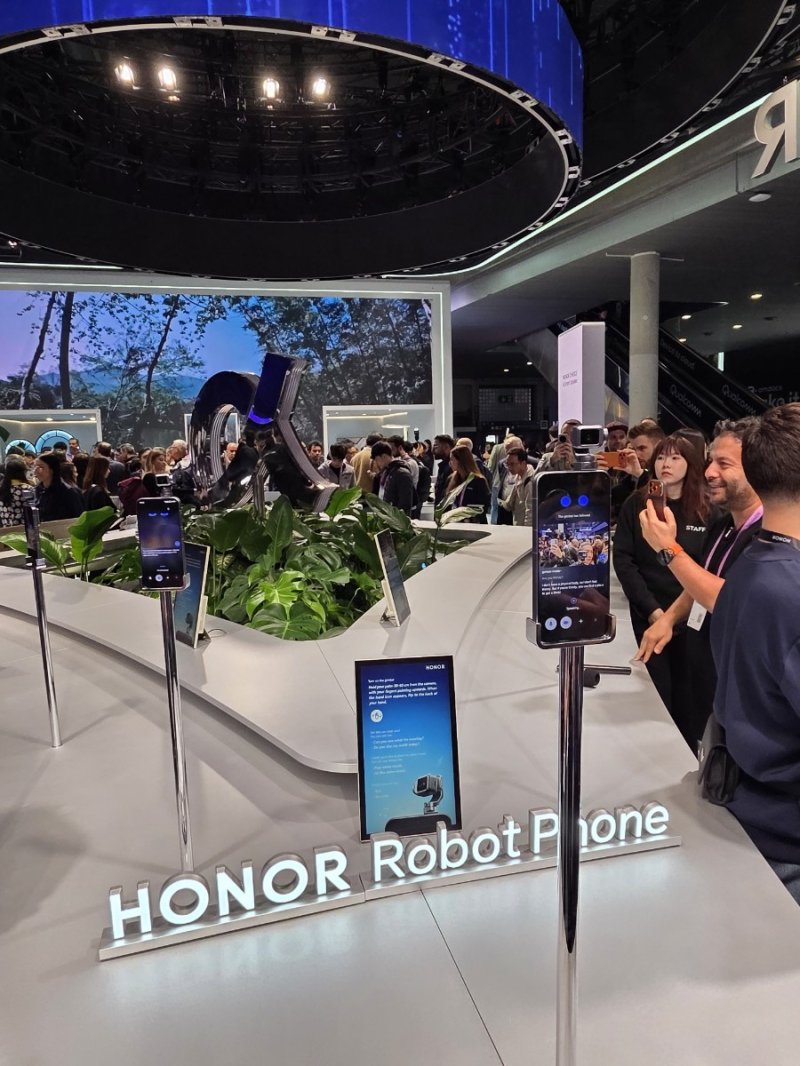
On March 3, the Chinese exhibitor booths, including Honor, Xiaomi, and Lenovo, located in Hall 3, the main exhibition hall of Fira Gran Via in Barcelona, Spain, for the Mobile World Congress (MWC) 2026, drew massive crowds of attendees eager to experience their innovative products and technologies firsthand. Just like last year, Honor set up its booth directly across from Samsung, showcasing its robots in a move that underscored the company’s technological prowess.
Honor’s Robot Phone Steals the Show
The crowd cheered as a humanoid robot danced rhythmically to Imagine Dragons’ “Believer.” A massive array of robots boasting enhanced user interaction were on full display, featuring AI-powered machines that could play Go, engage in rock-paper-scissors, and even shake hands with visitors. However, the product that undeniably captivated the audience was the “robot phone.” This device sported a robotic arm protruding from the top of a smartphone with a square 20-megapixel camera capable of 360-degree rotation. The phone’s built-in AI automatically detected and tracked human movement, creating a seamless, futuristic interaction between user and device. An Honor spokesperson revealed plans for an official launch in the second half of the year.
Without a doubt, China dominated the stage at this year’s MWC, the world’s largest telecommunications exhibition. With over 350 Chinese firms participating, China showcased advanced AI applications, spanning from “Physical AI” that applies artificial intelligence to manual labor to sophisticated AI integrations in smartphones and other IT devices. It was clear that Chinese tech firms are no longer content with being fast followers; they are now positioning themselves as innovation leaders, particularly accelerating their push into the premium European market.
Bridging Language Barriers with Real-Time Translation
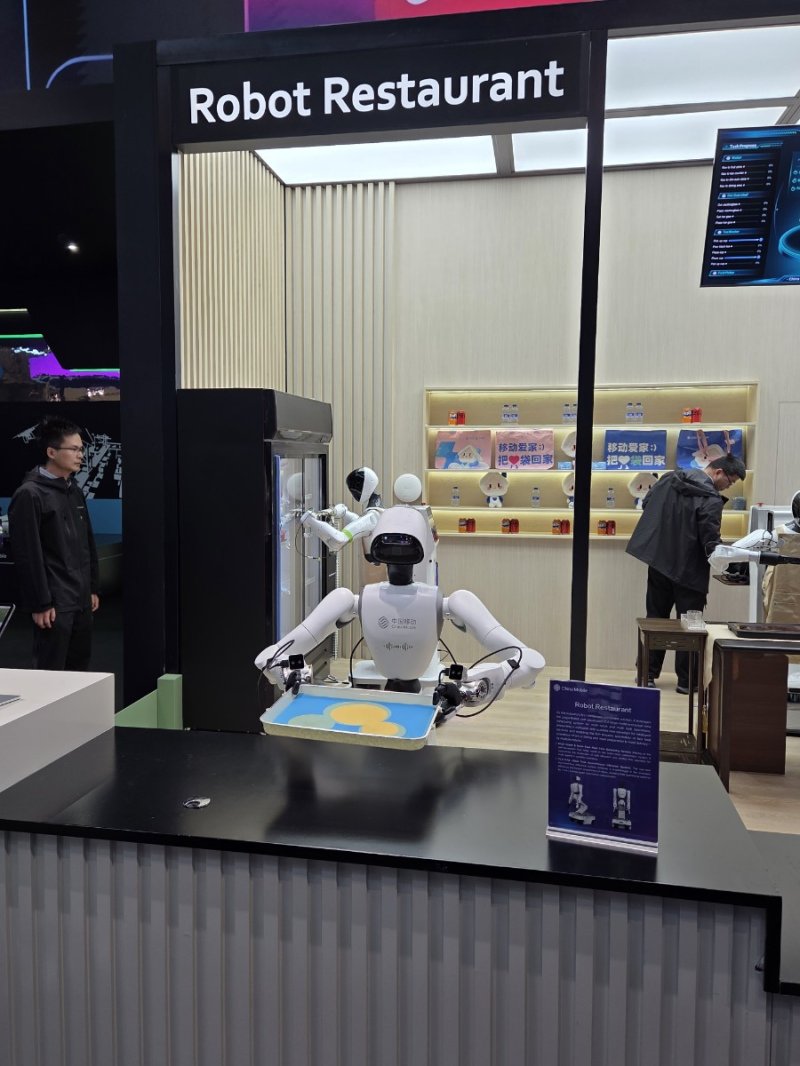
China Mobile’s exhibit centered around a “robot restaurant” concept, featuring four robots capable of preparing dim sum and serving customers. When visitors placed orders via a tablet, the robots arranged dumplings on trays and poured tea into cups. A China Mobile representative noted the significant improvements in robot dexterity, stating that spills and errors that occurred in previous generations have been virtually eliminated. He explained that this is a prototype for the unmanned, fully automated storefronts of the future.
Lenovo unveiled its “Workmate Robot” prototype, demonstrating its potential to streamline office tasks. In a live demonstration, a Lenovo representative signed a digital poster screen using a pen on a stand-shaped robot and spoke in to a microphone, saying, “Finished.” The robot recognized the command, processed the signature, and transmitted it to a laptop, producing a printed copy of the signed poster in just 30 seconds.
Xiaomi’s booth offered a window into the future of Artificial Intelligence of Things (AIoT) smart homes, showcasing an ecosystem of interconnected appliances, IT devices, and vehicles. Powered by Xiaomi’s proprietary AI model, “Mimo,” the “Milico” system learns user lifestyle patterns to create a seamlessly automated home environment. Visitors witnessed this technology in action as the air conditioner activated when someone sat down, lights turned on when a book was picked up, and off again when replaced with a smartphone. The system even demonstrated pet-friendly features, activating an air purifier when a model cat used a litter box and deploying a robot vacuum to clean up spilled cat food.
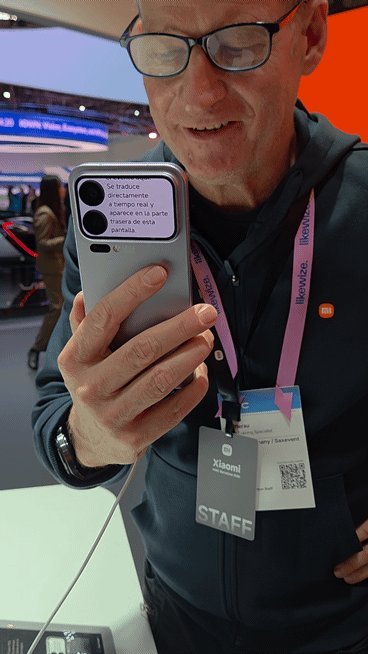
Xiaomi’s flagship smartphone series, the Xiaomi 17, demonstrated noticeably upgraded AI capabilities compared to its predecessor, including real-time translation. A German Xiaomi employee demonstrated this feature by speaking into the Xiaomi 17 Pro in German, with the Korean translation appearing instantly on the phone’s rear display. SK Telecom CEO Jung Jae-hun, who visited the Xiaomi booth the previous day, remarked, “I am quite surprised by Xiaomi. They have presented a comprehensive vision of how the AI era will connect every aspect of our lives.”