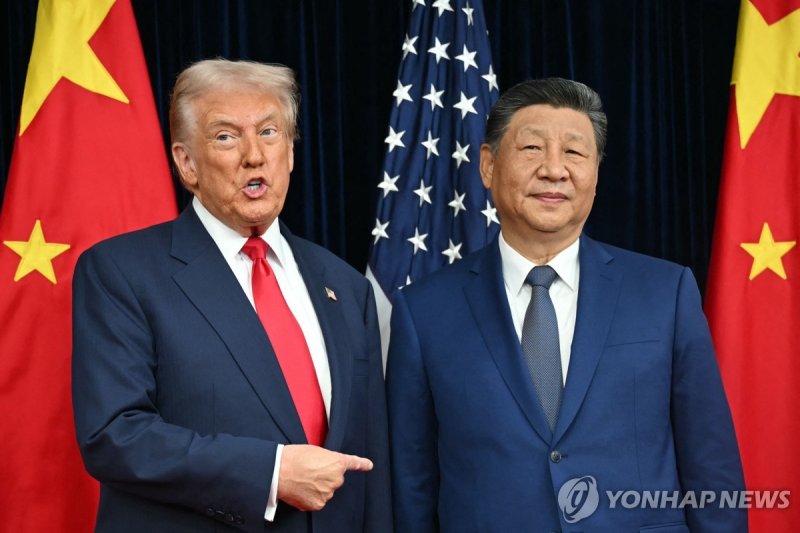
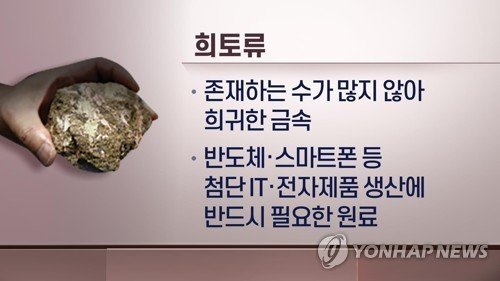
The U.S.-China power struggle is expanding beyond semiconductors and artificial intelligence (AI) to include rare earth elements. These strategic minerals are crucial components in electric vehicle motors, wind turbine generators, semiconductor processes, and defense industry components. While the U.S. and China agreed to a one-year pause on rare earth export controls at the Asia-Pacific Economic Cooperation (APEC) summit last October, this is widely viewed as a temporary measure. The control policies on heavy rare earths and China’s monopoly on refining and processing remain firmly in place, suggesting that medium to long-term supply chain instability will likely persist.
The Core Issue is Processing, Not Mining
Industry sources reported on January 3 that U.S. President Donald Trump and Chinese President Xi Jinping agreed to a “small deal” to refrain from escalating the ongoing tariff and trade war during a summit in Busan on October 30 last year. However, resolving the fundamental sources of conflict remains a distant goal.
The U.S. reduced some tariffs imposed on China and eased pressure by withdrawing export control measures introduced since September. China avoided a complete ban on rare earths and permanent magnets exports. Both countries seem to have entered a management phase, refraining from further retaliatory actions. Consequently, the immediate supply shock feared by global electric vehicle, wind, and electronics industries has diminished for now.
However, the power struggle is expected to continue until Trump’s planned visit to China in April next year. While escalation has been avoided, many view this as a managed ceasefire based on political agreements. Since the structural issues remain unresolved, uncertainty persists.
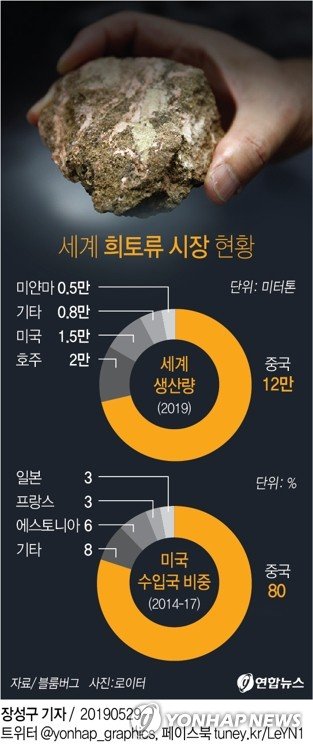
The essence of the rare earth conflict lies not in reserves but in processing capabilities. Although the U.S., Australia, Vietnam, and Brazil hold significant rare earth reserves, China dominates 80-90% of the global market’s post-mining stages, including refining, separation, and processing. Dependence on China is particularly absolute for neodymium and dysprosium-based permanent magnets, essential for electric vehicles and wind power.
China has focused on developing its rare earth refining industry for decades, accepting environmental pollution and low profitability. While Western countries abandoned the industry due to environmental regulations and cost issues, China accumulated technology, equipment, and skilled labor. As a result, rare earths have become not just resources for China but strategic leverage in diplomatic and security conflicts.
U.S. Faces Challenges in Overhauling Supply Chain
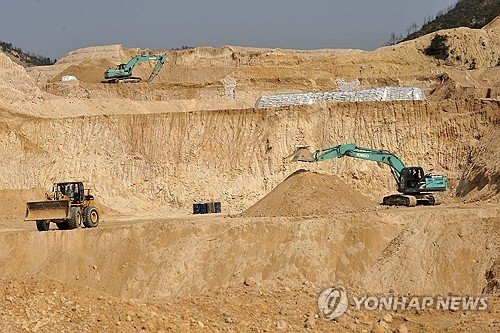
Recognizing this structural vulnerability, the U.S. is working to rebuild a domestic-centered rare earth supply chain. MP Materials, which operates the Mountain Pass mine in
California, symbolizes the revival of rare earth mining in the U.S. The government is attracting rare earth mining and some refining processes back to domestic soil through defense budgets and subsidies, while also pursuing alliance supply chains with Australia, Canada, and the European Union (EU).
However, the reality is challenging. Even if mining volumes increase, building a complete supply chain that includes refining, separation, and magnet manufacturing requires substantial time and investment. Environmental concerns and local opposition also pose significant hurdles. As a result, the U.S. continues to rely on Chinese rare earths and magnets in actual industrial settings, despite calls for decoupling from China.
Unlike semiconductors, rare earths require more time to develop and commercialize alternative technologies, making it difficult to undermine China’s advantage in the short term.
Instability in the rare earth supply chain directly impacts the energy transition industry. High-performance rare earth magnets are essential for the efficiency and durability of electric vehicle motors and offshore wind turbines. Supply disruptions or price surges quickly lead to increased costs, affecting consumer prices and industrial competitiveness.
The defense industry is equally vulnerable. Rare earths used in radar, missiles, and satellite systems have limited substitutes. Consequently, major countries manage rare earths as strategic stockpiled resources, similar to oil and gas.
While the APEC summit has led to a managed phase between the U.S. and China, easing short-term uncertainties in the rare earth supply chain, this represents only temporary stability based on political agreements. China’s monopoly on processing and geopolitical tensions remain. Technological substitutions and supply chain restructuring are long-term challenges, and rare earths are likely to continue as a key factor in the U.S.-China power struggle.
South Korea’s Challenge: Realizing Mineral Security
According to the National Assembly’s Legislative Research Service, South Korea ranks second among OECD countries in the share of manufacturing in its gross domestic product (GDP) as of 2023, at 27.6%, compared to the OECD average of about 15.8%. However, it faces structural limitations due to a lack of domestic mineral resources, forcing it to source most of its key raw materials, including essential minerals, from abroad.
While South Korea is not a direct participant in the rare earth conflict, its key industries, such as electric vehicles, batteries, semiconductors, and wind power, depend on rare earths, placing it within the sphere of influence of the U.S.-China power struggle. At the same time, high dependency on China raises the risk that geopolitical tensions could significantly burden the entire industry.
Some regions in South Korea, including Gangwon, Chungnam, and Ulsan, have confirmed the presence of rare earth deposits, with reported reserves reaching about 25.97 million tons. However, the average grade is around 2.1%, which is considered very low and economically unviable. The estimated value of the rare earth deposits, when converted to current prices, is only about 800 million KRW (approximately 552,000 USD).
At the corporate level, companies are diversifying procurement sources and managing inventories to respond in the short term. However, without alignment with government policies, mid- to long-term strategies face limitations. In this context, the National Resource Security Special Act was enacted last February. This law aims to integrate the management of key minerals, including rare earths, beyond mere market forces, encompassing energy, industry, diplomacy, and security considerations. While the oil stockpiling system was a national response to past energy crises, this law serves as a new security measure for the era of electric vehicles, wind power, semiconductors, and defense industries.
As a follow-up, the Ministry of Trade, Industry and Energy held the first Resource Security Council in early December, chaired by Minister Kim Jeong Gwan, designating key supply and demand institutions. The South Korean government plans to systematically establish a public-private joint crisis response system with these key supply and demand institutions.
An industry insider stated, “Even if the U.S.-China rare earth conflict is temporarily resolved, the structural vulnerabilities surrounding the supply chain will not disappear. For South Korea, this law serves as insurance against crises and as a minimum safety net to sustain energy transition and advanced industries.”