U.S. President Donald Trump’s announcement of the “Golden Fleet” initiative is set to accelerate U.S. Navy vessel construction by Korean shipbuilders. With the Golden Fleet potentially comprising up to 300 ships, experts doubt the feasibility of constructing all vessels solely at the Hanwha Philadelphia Shipyard, as Trump suggested. In fact, as the U.S. Department of Commerce concluded the proposal submission process for the U.S.-Korea shipbuilding cooperation project MASGA (Make American Shipbuilding Great Again) last month, it is highly likely that company equity shares may be determined in the new year.
Foreign media reports on Friday indicated that Trump’s proposed Golden Fleet will consist of 280 to 300 ships. This ambitious plan aligns with the U.S. Navy’s large-scale vessel modernization strategy. The initiative will begin with the construction of two large Trump-class battleships, eventually expanding to a fleet of 20 to 25. The Golden Fleet will also include new frigates and smaller vessels.
The primary challenge lies in the U.S. shipbuilding industry’s lack of technological prowess and production capacity to support such an extensive fleet. Analysts widely agree that outdated facilities and a shortage of skilled labor make this goal unrealistic. As a result, foreign companies that have acquired U.S. shipyards or collaborative efforts with allied nations are being considered as viable alternatives.
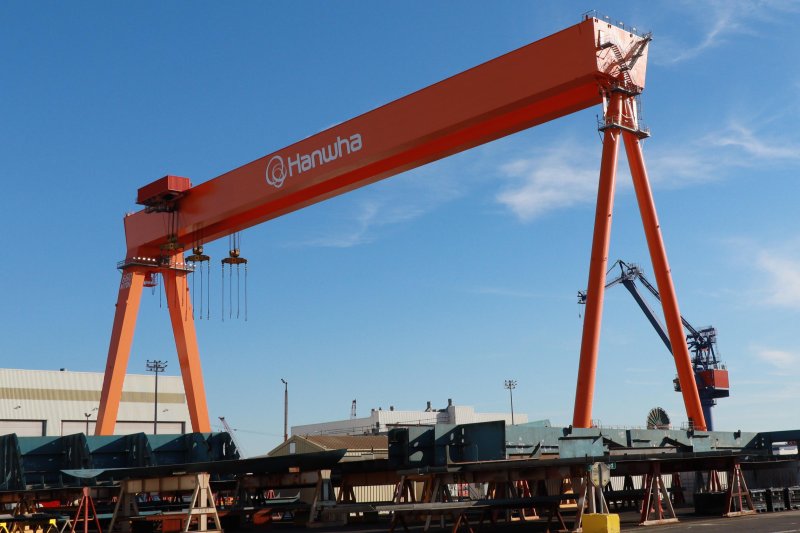
On Monday, Trump added weight to this argument by introducing the Golden Fleet concept, stating, “We will be working with the Korean company Hanwha. They’re a great company. They’ve agreed to invest 5 billion USD in the Philadelphia Navy Shipyard.”
However, the industry anticipates that Korean shipbuilders will likely divide the workload for various ship types in the Golden Fleet. Despite Hanwha’s ongoing modernization of the Philadelphia Shipyard facilities, experts believe it may not meet the rapid pace desired by the U.S.
The U.S. Department of Commerce’s recent completion of proposal submissions from Korean shipbuilders further supports this view. Beyond the big three including HD Hyundai, Samsung Heavy Industries, and Hanwha Ocean, small and medium-sized shipbuilders like HJ Industrial have also submitted proposals.
Among companies with U.S. shipyards, HD Hyundai appears most likely to secure contracts first. The company has already formed an alliance with Huntington Ingalls, the largest U.S. defense shipyard, to build next-generation logistical support vessels. They are also reviewing joint investments, including new shipyard establishments or acquisitions.
Huntington Ingalls, selected as the contractor for the U.S. Navy’s new class of frigates (small surface combatants), is spearheading the project. With the new frigates slated for launch in 2028, Huntington Ingalls is expected to serve as the primary shipyard, potentially delegating additional construction to allied shipyards to boost production speed.
However, significant challenges remain before the Golden Fleet initiative can transition into actual ship construction, including legal and regulatory adjustments and substantial capital investments.
Jeong Yeon-seung, an analyst at NH Investment & Securities, noted, “For cooperation with Korean shipyards to proceed, revision of U.S. laws is necessary. Additionally, depending on the situation of the shipyards, facility investment for warship construction or expansion of construction volume is needed.”