Wednesday, March 18, 2026

Understanding the US-China Semiconductor Dispute

The United States strongly criticized China’s semiconductor trade practices on Tuesday. However, as U.S. President Donald Trump works to thaw relations with China, he has opted to postpone the previously announced tariff hike on Chinese semiconductors until after mid-2027.

In a report published on its website, the U.S. Trade Representative (USTR) concluded that China is leveraging non-market economic strategies to dominate the global semiconductor industry. This finding comes after a year-long investigation.

The USTR report details China’s use of various non-market economic tactics.

China injected massive state subsidies into its semiconductor sector, restricted market access for foreign firms, and pressured foreign companies operating in China to transfer technology or forfeit their intellectual property.

The report also criticized China for discriminating against foreign companies through opaque regulations and engaging in unfair competition through exploitative labor practices.

Moreover, the USTR cautioned that China might weaponize semiconductors to exert pressure on other nations.

While China lacks cutting-edge semiconductor manufacturing capabilities, it dominates the market for general-purpose chips, such as those used in automobiles, which are cheaper and require lower technology levels.

Despite the USTR’s harsh criticism of China’s practices, it stopped short of taking immediate action.

The Trump administration had initially planned to raise tariffs on Chinese semiconductors but has now decided to delay implementation until at least June 23, 2027.

Although Trump had previously threatened tariffs as high as 100%, the actual rate is expected to be determined 30 days before implementation.

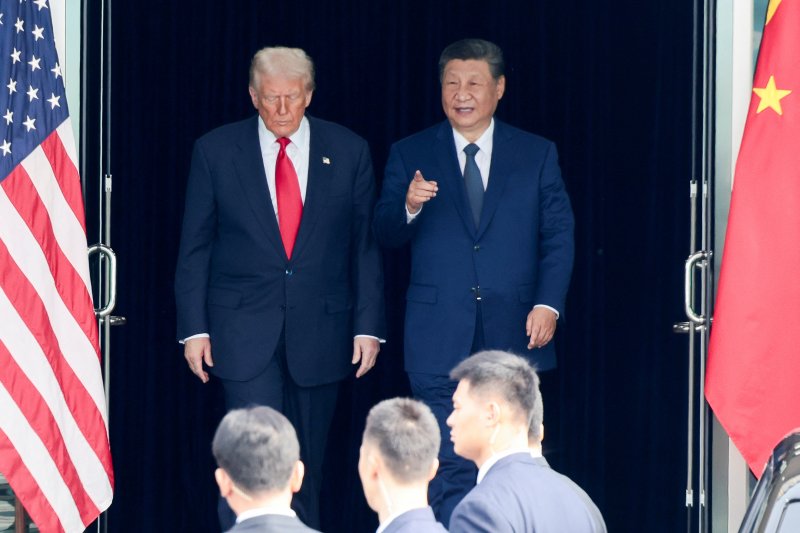
This decision appears to be influenced by Trump’s meeting with Chinese President Xi Jinping in South Korea last October, where they agreed to a trade war ceasefire.

The two leaders are scheduled to hold a summit in Beijing early next year.

Since Trump took office earlier this year, the two nations have been locked in extreme tension.

Tariffs skyrocketed to as high as 145%, and China even threatened to cut off the supply of rare earth materials, crucial for high-tech industries.

However, with the thawing atmosphere established following the October summit in South Korea, the trade war between the two countries has entered a lull, which ultimately led to the postponement of semiconductor tariffs.

Hot this week

Unlocking the Power of Intel Core Series 2: A Comprehensive Guide to Edge AI Solutions

Intel unveils Core Processor Series 2 and AI suite for healthcare, enhancing edge computing performance and reliability in industrial settings.

Samsung’s Record R&D Investment: How it is Shaping the Future of AI and Semiconductors

Samsung Electronics invested a record $25.33 billion in R&D to lead in AI and semiconductors, boosting its future tech capabilities.

How Rising Fuel Prices Impact Asian Airlines: A Comparison of FSC vs. LCC

Low-cost carriers are struggling to cope with rising fuel prices, lacking effective hedging strategies unlike major airlines.

SK Group Invests 630 Million USD AI Company

SK Group invests heavily in AI, aiming to transform into a leader in the AI market through a new U.S. investment firm.

Nvidia’s Jensen Huang Predicts 1000x Surge in AI Computing Demand

Nvidia's CEO highlights surging AI computing demand due to AI agents like OpenClaw, boosting memory chip demand from firms like Samsung.

Topics

Unlocking the Power of Intel Core Series 2: A Comprehensive Guide to Edge AI Solutions

Intel unveils Core Processor Series 2 and AI suite for healthcare, enhancing edge computing performance and reliability in industrial settings.

Samsung’s Record R&D Investment: How it is Shaping the Future of AI and Semiconductors

Samsung Electronics invested a record $25.33 billion in R&D to lead in AI and semiconductors, boosting its future tech capabilities.

How Rising Fuel Prices Impact Asian Airlines: A Comparison of FSC vs. LCC

Low-cost carriers are struggling to cope with rising fuel prices, lacking effective hedging strategies unlike major airlines.

SK Group Invests 630 Million USD AI Company

SK Group invests heavily in AI, aiming to transform into a leader in the AI market through a new U.S. investment firm.

Nvidia’s Jensen Huang Predicts 1000x Surge in AI Computing Demand

Nvidia's CEO highlights surging AI computing demand due to AI agents like OpenClaw, boosting memory chip demand from firms like Samsung.

How Samsung’s Galaxy S26 Series Leverages India’s R&D for Innovation

Samsung's R&D centers in India are key to developing the Galaxy S26, highlighting India's role in global tech innovation.

GPT-5.4 vs. GPT-5.2: What Makes OpenAI’s Latest Model a Game Changer?

OpenAI launched GPT-5.4, an AI model enhancing professional tasks with improved coding, reasoning, and tool integration capabilities.

Apple MacBook Air M5: Is the Price Increase Worth the AI Performance Boost?

Apple launches the MacBook Air with M5 chip, doubling storage and enhancing AI capabilities, starting from 1,223 USD.

Related Articles