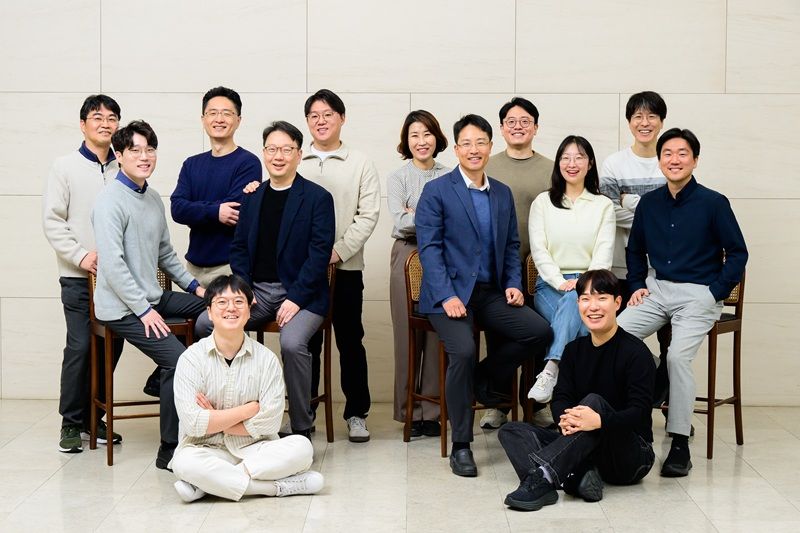
Samsung Electronics unveiled groundbreaking technology that could reduce power consumption in NAND flash memory by up to 96% compared to conventional standards. The company announced on Thursday through its newsroom that a paper titled “Ferroelectric transistors for low-power NAND flash memory,” co-authored by 34 researchers from SAIT (formerly Samsung Advanced Institute of Technology) and the Semiconductor Research Institute, has been published in the prestigious scientific journal Nature.
This pioneering research marks the world’s first identification of a core mechanism using ferroelectric materials to achieve such significant power savings.
Traditional NAND flash memory faced a trade-off between increasing storage capacity and power consumption. Samsung’s SAIT team found a way to overcome this limitation by combining the unique properties of oxide semiconductors with ferroelectric-based NAND flash memory.
The result demonstrates the potential to reduce power consumption by up to 96% during cell string operations compared to existing technology. This breakthrough could pave the way for high-capacity storage of 5 bits per cell while simultaneously lowering power requirements.
As power efficiency becomes increasingly crucial for AI-driven solid-state drives (SSDs), this technology is poised to shape the future of NAND flash memory.
The global NAND flash market is set for long-term growth, driven largely by AI expansion. Market research firm Omdia projects that global NAND market revenue will climb from 65.6 billion USD in 2024 to 93.7 billion USD by 2029, with bit shipments expected to grow at an average annual rate of 17.7% during this period.
Amid these market conditions, Samsung Electronics is strengthening its position in the NAND flash sector. According to TrendForce, Samsung’s NAND flash revenue for Q2 reached approximately 5.2 billion USD, a 23.8% increase from the previous quarter, capturing a 32.9% market share.
Samsung Electronics has established a foundation for ultra-high stacking technology through mass production of its 9th generation V-NAND. The company is optimizing its quad-level cell (QLC) based high-capacity SSD lineup across all applications, including servers, PCs, and mobile devices. To stay ahead of the market shift towards high-capacity storage, Samsung is increasing its focus on SSDs designed for AI servers. The tech giant is also strategically preparing for next-generation applications such as on-device AI, automotive systems, and edge devices.