The recent agreement between Israel and Hamas marks a victory for U.S. President Donald Trump’s pressure-based diplomacy. On Wednesday, Trump hailed the agreement as the first step toward a robust, enduring, and permanent peace. Since before taking office, Trump has made resolving the Gaza crisis a key foreign policy objective.
Immediately after his election, Trump appointed his close associate, real estate developer Steve Witkoff, as his Middle East envoy. He dispatched Witkoff to Israel and Qatar even before his inauguration, underscoring his commitment to ending the Gaza conflict. When Israel and Hamas reached a Phase 1 ceasefire and prisoner exchange agreement just five days before his inauguration on January 15, Trump claimed full credit. However, achieving lasting peace proved more challenging than he anticipated.
Trump’s post-war plans included forcibly relocating Palestinian residents and transforming Gaza into a “Middle Eastern Riviera.” However, negotiations between Israel and Hamas stalled, impeding progress toward a second-phase ceasefire. The situation deteriorated when Israel resumed airstrikes in mid-March, leading to a surge in Gaza casualties.
Following these setbacks, Trump intensified consultations with Qatar and Egypt – the mediating countries – to pressure both Israel and Hamas into a ceasefire agreement. Despite frequent claims of imminent breakthroughs, negotiations remained deadlocked. On July 25, Trump expressed frustration, accusing Hamas of preferring death over sincere negotiation. Matters were further complicated when Israel conducted airstrikes in Qatar, a pro-American mediator, targeting Hamas leadership in September.
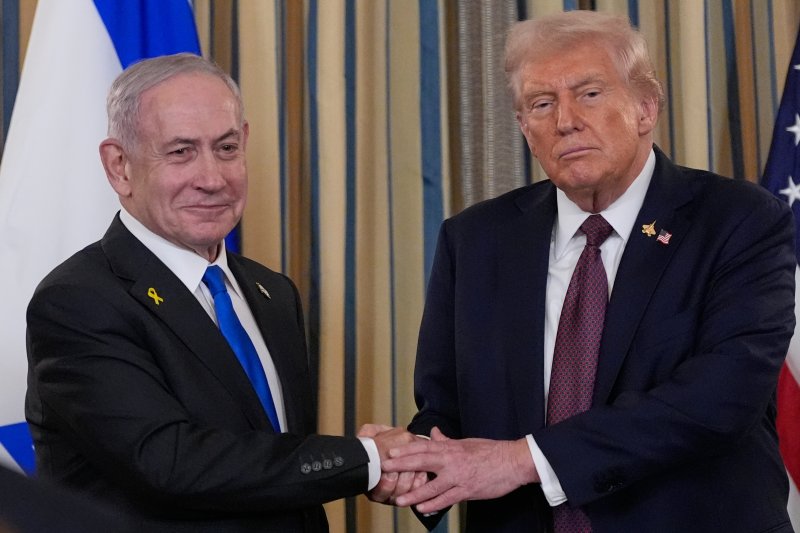
Amid this situation, Trump announced a Gaza peace plan after meeting with Israeli Prime Minister Benjamin Netanyahu at the White House on September 29, thereby accelerating ceasefire talks. This comprehensive 20-point plan includes provisions for prisoner exchanges, Israeli troop withdrawal, Hamas disarmament, reconstruction of Gaza by a temporary Palestinian technocratic government under the supervision of the international community including Trump himself, and the deployment of international peacekeepers.
Trump first secured Israel’s agreement before applying strong pressure on Hamas. On October 3, he issued a public ultimatum, warning of dire consequences if Hamas failed to accept the peace plan within three days. That same day, Hamas announced its intention to release all hostages in accordance with Trump’s proposal and entered into detailed negotiations with Israel.
Trump continued to closely monitor the situation by involving his son-in-law Jared Kushner and Middle East envoy Witkoff in the negotiations, which ultimately led to the announcement of the agreement.
However, skepticism persists regarding the durability of the ceasefire, given that previous agreements between Israel and Hamas have collapsed within two months. The lack of publicly disclosed details further fuels uncertainty. The New York Times noted that the war’s end remains uncertain, highlighting that neither side addressed Hamas’ disarmament – a key Israeli demand consistently rejected by Hamas.