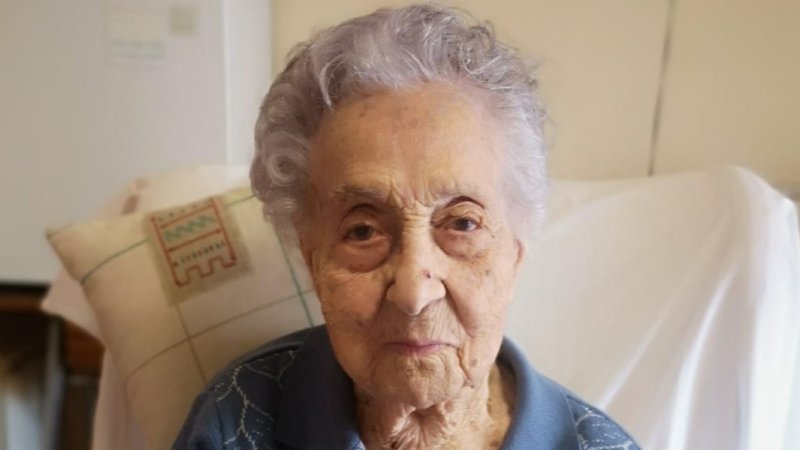
A new research has revealed the secrets behind the extraordinary longevity of the world’s oldest woman, who passed away last year. This distinguished lady, who lived for 117 years and 168 days, attributed her impressive lifespan to a combination of genetic advantages and commendable lifestyle choices.
According to a recent report by The New York Times, scientists from Spain’s Josep Carreras Leukaemia Research Institute and the University of Barcelona have been examining the genetic makeup and daily routines of Maria Branyas Morera.
Born in San Francisco in 1907, Branyas moved to her parents’ native Spain when she was eight years old.
She lived through two World Wars, the Spanish Civil War, the Spanish flu, and even the recent COVID-19 pandemic, from which she successfully recovered at age 113.
In 2023, she attained the title of the world’s oldest person and retained it until her passing.
Although Branyas outlived her son, who died at 52, her two daughters continue to thrive at ages 92 and 94. Other family members and relatives passed away from common illnesses such as Alzheimer’s, cancer, tuberculosis, kidney disease, and heart problems.
Before her death, Branyas requested that doctors study her to help others. Accordingly, researchers used samples samples of her blood, saliva, urine, and feces, collected one year before her death, to compile a comprehensive biological profile, including her genome, transcriptome, metabolome, proteome, and microbiome.
The analysis revealed clear signs of aging in Branyas.
Although she showed distinct signs of aging such as telomere shortening, an unusual population of B-cells, and clonal hematopoiesis, which increases the risk of leukemia and inflammatory diseases, her unusually short telomeres might have contributed to cancer prevention by limiting cell division.
Her DNA contained a gene variant that protects her heart and brain from disease and dementia. Additionally, she maintained low levels of inflammation along with excellent cholesterol and fat metabolism.
Dr. Manel Esteller, who led the research, observed that Branyas’s biological age was at least 10–15 years younger than her actual age.
The New York Times described Branyas a person who “won the genetic lottery” with variants that “could predict longevity.”
In addition to her genes, Branyas’ lifestyle also played a significant role.
She did not smoke or drink, and maintained a healthy weight throughout her life.
She ate three yogurts a day, which likely contributed to a microbiome rich in beneficial bacteria such as Bifidobacterium.
Despite living alone since 2001, Branyas remained connected with family and friends in her village and even played the piano until five years ago.
Dr. Esteller hopes this research will lead to advancements in elderly care, but also added that while Branyas’s parents provided her with remarkable genes, people cannot choose their parents.
The full study is available in the latest issue of Cell Reports Medicine.